

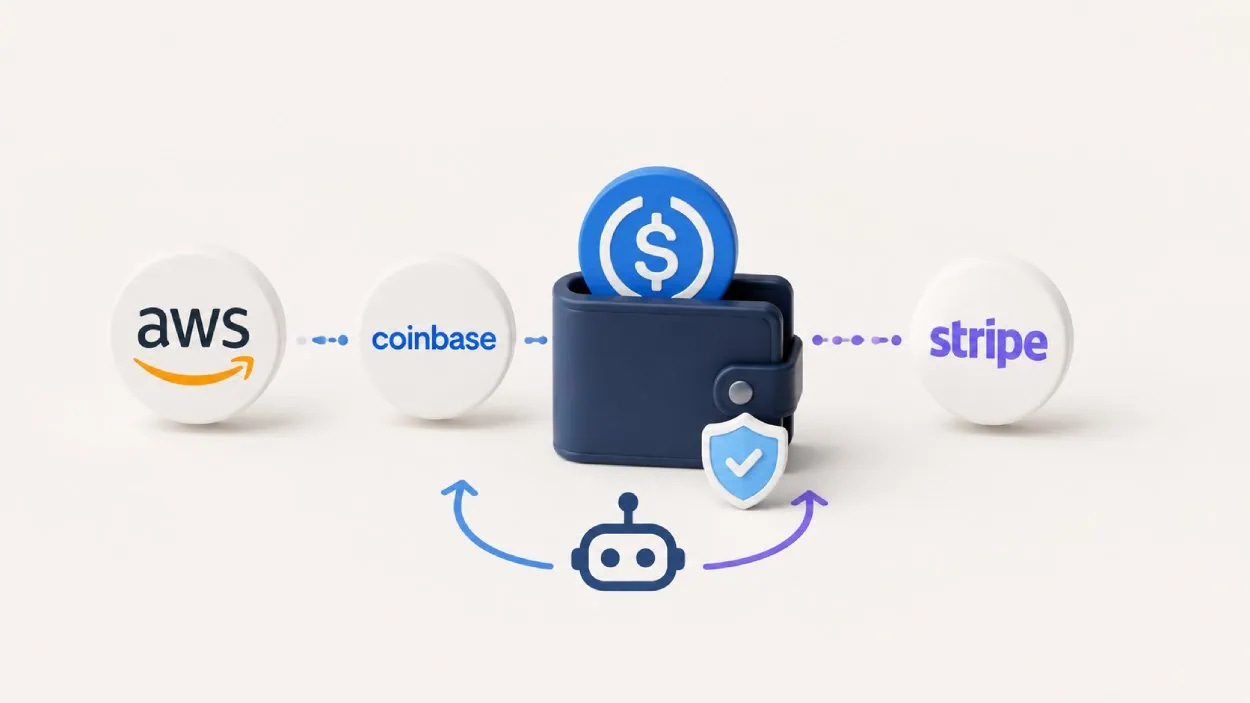
Amazon is rolling out a new AI-driven payments initiative in collaboration with Coinbase and Stripe, aiming to create infrastructure that allows autonomous AI agents to transact using stablecoins. The platform is designed to support machine-to-machine commerce, enabling AI systems to complete payments, purchases, and financial actions without direct human intervention. The move signals a major evolution in digital payments as tech giants increasingly explore the intersection of AI and blockchain-based finance. By leveraging stablecoins, the initiative could significantly reduce transaction friction and improve the efficiency of global digital commerce. The collaboration also reinforces the growing role of programmable payments in future financial ecosystems. For fintech and crypto firms, the development highlights rising institutional confidence in stablecoin infrastructure for enterprise-scale applications. Overall, the launch represents one of the strongest signals yet that AI-native financial systems are moving closer to mainstream adoption.
Video of the Day
Insight of the Day
Stablecoins could reshape Africa’s digital payments landscape

What stood out to me in this report is that it avoids the usual stablecoin narrative of “faster and cheaper payments” and instead focuses on systems design.
The core argument is correct: stablecoins alone do not solve Africa’s payments problem. They only solve one layer of it, settlement. The harder layers remain access, regulation, liquidity, identity, and last-mile usability. That distinction matters. Too many market participants confuse a better rail with a complete product.
The Grace example captures this well. Receiving USDC in minutes sounds transformative. But if converting it into usable local money still requires peer-to-peer workarounds, extra fees, and counterparty risk, then friction has simply moved rather than disappeared. This is the same point many institutional stablecoin use cases are now proving globally: the bottleneck is often at the edges, not the ledger itself.
I also agree with the report’s comparison to the early internet. Infrastructure comes before killer applications. The internet only became dominant after physical networks, common protocols, browsers, and supportive regulation matured. Stablecoins are in a similar phase. Many people evaluate them based on today’s UX, while the real question is what can be built once surrounding infrastructure catches up.
Another strong point is the warning on digital dollarisation. In markets with weak local currencies, dollar stablecoins are rational for users but difficult for domestic financial systems. If deposits migrate into foreign-issued digital dollars, local banks lose funding, lending costs rise, and monetary policy weakens. That is not anti-innovation rhetoric. It is balance-sheet reality.
This is why the report’s emphasis on domestic issuance and African-led infrastructure is important. If stablecoins become a core part of African finance, value capture should not sit entirely with offshore issuers holding reserves in foreign sovereign debt. The biggest lesson from the internet era is not just adoption. It is who owned the platforms.
The three opportunity areas are directionally strong:
- Pan-African payments: using stablecoins as a neutral settlement layer behind local wallets and bank interfaces
- Savings products: dollar access and value preservation for underbanked populations
- Programmable money: conditional disbursements, trade flows, agriculture finance, aid distribution
The first large-scale wins will likely be invisible infrastructure, not consumer wallets. Users may never know stablecoins are involved. They will just notice cheaper remittances, faster merchant settlement, better treasury flows, and more reliable cross-border commerce.
That is usually how infrastructure wins. It disappears into the product experience.
The real opportunity in Africa is not to copy global stablecoin models. It is to build locally relevant financial products on top of programmable settlement rails.
Curated News
💳 Payments
Visa Launches ‘Tap to Confirm’ Security Technology
Visa unveiled its new Tap to Confirm technology aimed at improving payment authentication and reducing fraud during transactions. The feature reflects the continued push toward frictionless yet secure payment experiences for consumers and merchants.
Source
Corpay Partners With BVNK for Stablecoin Wallets
Corpay teamed up with BVNK to introduce stablecoin wallet capabilities into corporate payments. The partnership highlights increasing enterprise demand for faster and more flexible blockchain-powered treasury solutions.
Source
TransFi Expands Cross-Border Payments Across Southeast Asia
Dubai-based fintech TransFi is expanding its cross-border payment services throughout Southeast Asia. The move underscores growing regional demand for faster international settlement infrastructure and digital payment alternatives.
Source
Telr and Geidea Join Forces on Merchant Payments
Telr and Geidea announced a strategic partnership focused on enhancing merchant payment capabilities across the region. The collaboration aims to improve digital commerce infrastructure and streamline payment acceptance for businesses.
Source
Alipay Introduces AI-Powered Shopping Delegation
Alipay launched a new feature allowing users to delegate purchases to AI assistants. The rollout highlights how AI is increasingly being integrated into consumer finance and commerce experiences.
Source
🏦 Banking
U.S. Bank Deepens AWS Partnership for AI Transformation
U.S. Bank expanded its collaboration with AWS to accelerate technology modernization and AI-driven customer experience initiatives. The partnership reflects how traditional banks are increasingly relying on cloud infrastructure to enhance digital banking capabilities.
Source
Singapore’s MAS Trains AI Using Live Banking Data
Singapore’s Monetary Authority is developing AI systems trained on live bank data to strengthen anti-financial crime monitoring. The initiative demonstrates how regulators are leveraging AI to improve fraud detection and compliance oversight.
Source
Tencent Cloud Expands AI Chat Banking in Malaysia
Tencent Cloud partnered with Ryt Bank Malaysia to power AI-driven chat banking services. The collaboration reflects accelerating adoption of conversational banking technologies across Asia’s digital finance sector.
Source
Commerzbank Cuts 3,000 Jobs Amid Takeover Pressure
Commerzbank plans to eliminate 3,000 jobs as it responds to mounting pressure from UniCredit takeover discussions. The restructuring highlights the operational challenges facing major European banks in a shifting economic environment.
Source
🚀 Fintech
Keel Repositions as Fintech Infrastructure Provider
Keel unveiled a new fintech infrastructure business after pivoting away from its original neobank model. The shift reflects a broader industry trend where fintech startups are moving toward B2B infrastructure and embedded finance services.
Source
Wise Debuts U.S. Listing on Nasdaq
Wise officially launched its U.S. listing on Nasdaq, marking a major milestone for the global payments fintech. The move is expected to strengthen the company’s visibility among U.S. investors and support future growth initiatives.
Source
🪙 Crypto
Circle Raises $222M for Institutional Blockchain Platform
Circle secured $222 million in funding for Arc, its institutional blockchain initiative. The investment signals growing institutional confidence in blockchain infrastructure designed for enterprise finance applications.
Source
Kraken Parent Targets $20B Valuation Ahead of IPO
Payward, Kraken’s parent company, is reportedly seeking fresh funding at a $20 billion valuation before a potential IPO. The fundraising effort reflects continued investor optimism around large-scale crypto infrastructure firms.
Source
MoonPay Acquires Dawn Labs for AI Trading Expansion
MoonPay acquired Dawn Labs and launched a new AI trading copilot focused on prediction markets. The move highlights growing convergence between AI tooling and crypto trading ecosystems.
Source
Strategy Resumes Bitcoin Purchases
Strategy resumed buying Bitcoin as Michael Saylor reaffirmed the company’s long-term commitment to holding BTC. The decision reinforces confidence among institutional Bitcoin advocates despite ongoing market volatility.
Source
📈 WealthTech
Sarwa Surpasses $1B in Client Assets
UAE-based fintech Sarwa surpassed $1 billion in client assets, becoming the first homegrown UAE fintech to reach the milestone. The achievement highlights the rapid growth of digital wealth management platforms across the Middle East.
Source
Gresham and FundGuard Partner on Portfolio Insights
Gresham and FundGuard announced a partnership focused on improving portfolio data intelligence for asset managers. The collaboration aims to enhance operational efficiency and real-time investment analytics.
Source
TwoWay Raises €1.5M for Trading Intelligence Platform
TwoWay secured €1.5 million in pre-seed funding to build real-time intelligence tools for fragmented trading desks. The platform aims to streamline decision-making and improve visibility across complex trading operations.
Source
⚖️ Regulation
ECB’s Lagarde Remains Skeptical on Euro Stablecoins
ECB President Christine Lagarde expressed doubts about the long-term viability of euro-denominated stablecoins. Her comments reinforce Europe’s cautious stance toward privately issued digital currencies.
Source
Augustus Receives Conditional OCC Approval
Augustus secured conditional approval from the OCC to operate an AI- and stablecoin-focused banking institution. The development represents another step toward regulatory acceptance of digital asset-native banking models in the U.S.
Source
📌 Other
Google Finance Expands Into Europe
Google Finance officially launched expansion efforts across Europe, signaling deeper competition in digital financial information and consumer finance tools. The move could increase pressure on regional fintech and financial data providers.
Source
Disclaimer: Payments Wrap Up aggregates publicly available information for informational purposes only. Portions of the content may be reproduced verbatim from the original source, and full credit is provided with a “Source: [Name]” attribution. All copyrights and trademarks remain the property of their respective owners. Payments Wrap Up does not guarantee the accuracy, completeness, or reliability of the aggregated content; these are the responsibility of the original source providers. Links to the original sources may not always be included. For questions or concerns, please contact us at sam.boboev@fintechwrapup.com.