

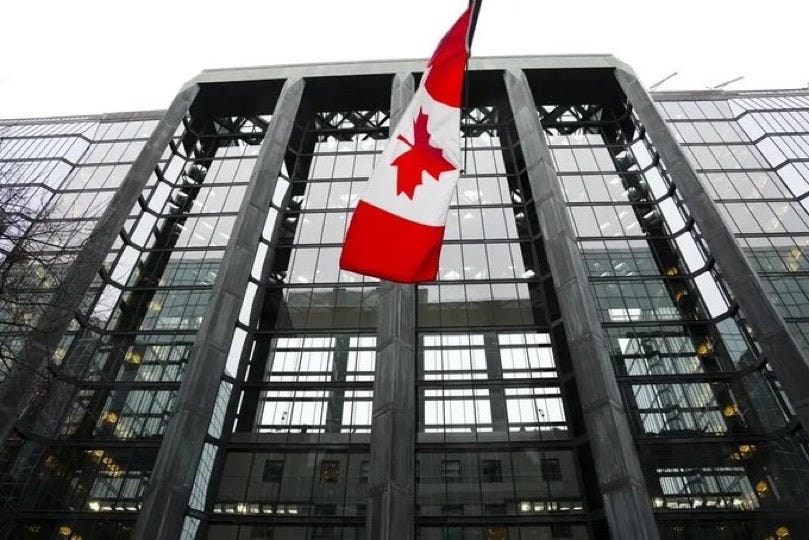
The Bank of Canada, alongside several of the country’s largest financial institutions, has successfully completed a pilot exploring the issuance and settlement of tokenized bonds using distributed ledger technology. The trial examined how blockchain-based infrastructure could streamline bond issuance, improve transparency, and reduce settlement friction in traditional capital markets. Tokenization of financial assets has emerged as one of the most significant innovation themes in institutional finance, with banks, exchanges, and central banks actively experimenting with the technology.
The project demonstrates how tokenized securities could modernize fixed-income markets by enabling faster settlement and more efficient asset servicing. By involving both regulators and major financial institutions, the trial also highlights growing institutional confidence in blockchain infrastructure for capital markets. Many global banks are currently exploring similar initiatives as they look to digitize traditional assets and improve operational efficiency. The results of the pilot could influence how financial institutions approach tokenized asset issuance and settlement in the coming years. For the fintech ecosystem, the initiative signals that tokenization is moving steadily from experimentation toward real-world financial market infrastructure.
Video of the Day

Insight of the Day
Tokenization is the next evolution of finance

Capital markets evolved in layers.
Paper certificates and manual settlement defined the early era. Centralized electronic exchanges like Nasdaq and the creation of DTC digitized records but preserved intermediated clearing. Electronic trading venues and alternative systems fragmented liquidity while improving speed. Digital brokerages abstracted access. Stablecoins introduced programmable settlement. Now tokenization collapses issuance, trading, and settlement into a single programmable layer.
Each phase reduced friction but maintained separation between asset, ledger, and payment rail.
____
Tokenization removes that separation.
A tokenized asset is issued on the same infrastructure where it settles. Ownership, transfer, collateralization, and compliance logic are embedded at the asset layer. Clearing becomes code. Custody becomes key management. Corporate actions become programmable events.
This is not about crypto speculation. It is about balance sheet efficiency.
When treasuries, funds, private credit, and real-world assets are represented as tokens, settlement moves from T+2 to atomic. Collateral becomes mobile. Liquidity becomes 24/7. Capital velocity increases because reconciliation disappears.
____
The sequence is predictable.
-> Stablecoins solved on-chain cash.
-> Exchanges and custodians solved access.
-> Now asset managers tokenize funds and treasuries.
-> Banks integrate tokenized deposits and programmable money.
The end state is not “crypto finance.” It is unified infrastructure where assets and money share the same ledger logic.
The institutions that understand this are not experimenting. They are re-architecting.
Tokenization is not an overlay on legacy finance. It is the replacement layer.
Curated News
💳 Payments
Visa Expands Intelligent Authorization to Modernize Payment Processing
Visa has enhanced its Intelligent Authorization system to improve payment approval rates and optimize transaction processing for banks and financial institutions. The technology uses advanced analytics and AI to identify legitimate transactions more accurately. The upgrade aims to reduce false declines while strengthening fraud detection capabilities.
Source
NjiaPay Secures Investment to Build African Payments Infrastructure
African payments platform NjiaPay has received backing from Dutch investor Newion to accelerate development of payment infrastructure across the continent. The funding will help expand services that enable businesses to manage and optimize payment operations across multiple providers. The deal reflects growing investor interest in Africa’s rapidly evolving digital payments ecosystem.
Source
Nexi Launches Mobile Payment Services in Ireland
European payments firm Nexi has expanded its mobile payment solutions into the Irish market. The rollout aims to support merchants and consumers with more flexible digital payment options. The expansion reflects increasing demand for mobile-first payment experiences across Europe.
Source
Indian Paytech Easebuzz Seeks $32.5M in New Funding
Indian digital payments provider Easebuzz is seeking up to $32.5 million in funding to support its expansion and product development. The company provides payment solutions for businesses including payment gateways and financial services tools. The funding push highlights strong growth in India’s digital payments ecosystem.
Source
🏦 Banking
Tide Launches Global Mobile Plans for Business Banking Customers
UK-based business banking platform Tide has launched mobile plans for its customers worldwide, integrating telecom services into its banking offering. The initiative aims to provide entrepreneurs and small businesses with bundled financial and connectivity services. The move signals how digital banks are expanding into adjacent services to deepen customer relationships.
Source
🧠 Fintech
Hyundai Card Trains Leadership Team on Large Language Models
South Korea’s Hyundai Card has launched an internal training program focused on large language models (LLMs) for its leadership team. The initiative aims to improve executives’ understanding of AI technologies and their potential applications across financial services. It reflects how financial institutions are prioritizing AI literacy at the leadership level.
Source
Orca Fraud Raises $2.35M to Expand Real-Time Fraud Intelligence
Fraud prevention fintech Orca Fraud has raised $2.35 million to expand its real-time fraud intelligence platform across emerging markets. The technology helps financial institutions detect and prevent fraudulent activity through advanced analytics and data sharing. The funding will support the company’s growth as demand for fraud prevention tools increases globally.
Source
🪙 Crypto
Stablecoin Startup KAST Raises $80M to Expand Financial Services
Stablecoin-focused fintech KAST has raised $80 million to expand its role in mainstream financial services. The company aims to move stablecoins beyond infrastructure into broader financial applications such as payments and financial products. The funding highlights growing investor confidence in stablecoin-driven fintech models.
Source
Bitcoin Shows Signs of Recovery as Geopolitical Tensions Ease
Bitcoin has begun showing tentative signs of recovery after recent volatility tied to geopolitical tensions. Analysts note that reduced concerns around potential conflict have helped stabilize crypto markets. The rebound highlights how macro and geopolitical developments increasingly influence digital asset prices.
Source
Zcash Outperforms Bitcoin Following $25M Development Funding
Privacy-focused cryptocurrency Zcash has outpaced Bitcoin’s gains after its development team secured $25 million in funding. The investment will support further development of the network and privacy-enhancing technology. The move has renewed investor interest in privacy-focused digital assets.
Source
Sharplink Reports $734M Loss Despite Ethereum Staking Growth
Crypto firm Sharplink reported a $734 million loss even as revenue from Ethereum staking increased significantly. The results highlight the volatility and operational challenges facing companies operating in the digital asset sector. Despite losses, staking services remain a key revenue stream for many crypto businesses.
Source
💼 WealthTech
Crowdcube Opens Blockchain.com Share Sale to Retail Investors
Equity crowdfunding platform Crowdcube will allow retail investors to participate in a share sale for crypto firm Blockchain.com. The initiative gives smaller investors access to opportunities typically reserved for institutional players. The move highlights the growing intersection between crowdfunding platforms and the digital asset sector.
Source
Cboe Launches New Framework for Advanced Prediction Markets
Cboe has introduced a new framework designed to expand prediction markets beyond simple yes-or-no outcomes. The platform will allow users to engage with more complex forecasting markets across different sectors. The development signals growing institutional interest in prediction-based financial products.
Source
⚖️ Regulation
Bithumb Faces Proposed Six-Month Suspension Over AML Violations
South Korean crypto exchange Bithumb is facing a potential six-month suspension after regulators identified alleged anti-money laundering violations. Authorities claim the exchange failed to properly enforce compliance procedures. The case highlights increasing regulatory scrutiny on crypto exchanges worldwide.
Source
Moldova Investigates $107M Crypto Scheme Linked to Election Influence
Authorities in Moldova are investigating a $107 million cryptocurrency scheme allegedly used to influence elections. Officials claim the funds may have been used for illicit political financing. The case underscores rising concerns about the role of crypto in election interference and financial crime.
Source
UK Launches National Online Crime Squad to Combat Digital Fraud
The UK government has launched a new online crime unit aimed at tackling digital fraud and cyber-enabled financial crime. The initiative will coordinate efforts between law enforcement agencies to protect consumers and businesses. The move reflects growing regulatory focus on combating online financial crime.
Source
📊 Other
Nasdaq and Boerse Stuttgart’s Seturion Expand Infrastructure Partnership
Nasdaq and Boerse Stuttgart Group’s Seturion have partnered to strengthen digital asset infrastructure capabilities. The collaboration focuses on enhancing institutional services and supporting digital asset market development. The partnership reflects growing collaboration between traditional exchanges and digital asset infrastructure providers.
Source
NYSE Fined $9M by SEC Over Trading System Glitch
The U.S. Securities and Exchange Commission has fined the New York Stock Exchange $9 million following a trading system malfunction. Regulators determined the exchange failed to properly supervise systems that disrupted trading activity. The case highlights the importance of operational resilience in modern market infrastructure.
Source
Disclaimer: Payments Wrap Up aggregates publicly available information for informational purposes only. Portions of the content may be reproduced verbatim from the original source, and full credit is provided with a “Source: [Name]” attribution. All copyrights and trademarks remain the property of their respective owners. Payments Wrap Up does not guarantee the accuracy, completeness, or reliability of the aggregated content; these are the responsibility of the original source providers. Links to the original sources may not always be included. For questions or concerns, please contact us at sam.boboev@fintechwrapup.com.