

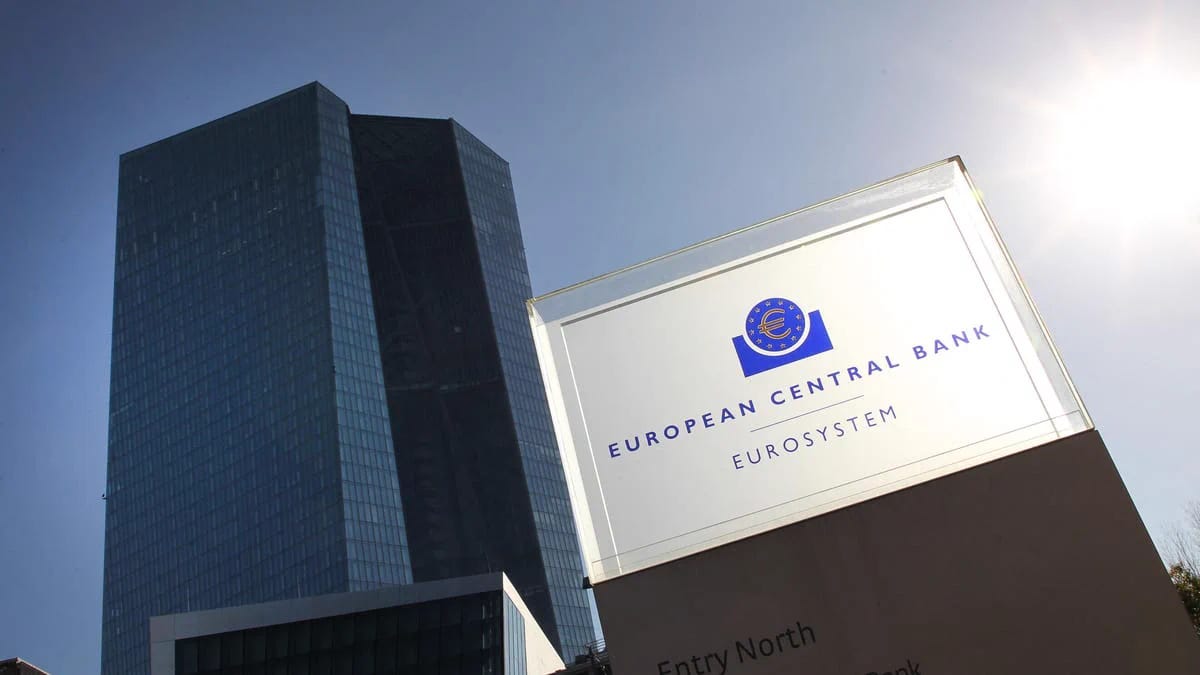
The Eurosystem is bringing central bank money into tokenised financial markets, marking a significant step toward connecting traditional central-bank infrastructure with blockchain-based finance. The initiative focuses on enabling central bank money to be used in transactions involving tokenised assets. This could help bridge existing financial-market infrastructure with emerging distributed-ledger systems. For banks and capital-markets firms, the development is particularly relevant to the broader shift toward tokenised securities and digital settlement. It also shows how central banks are increasingly engaging directly with the infrastructure underpinning tokenised finance.
Video of the Day
Insight of the Day
Tokenized Money for Banks

Banks have been issuing tokenized money for the better part of a decade, but those products were primarily tokenized deposits on private networks. Regulation has since cleared a path for tokenized money on public networks, giving financial institutions more options to serve the growing institutional demand.
In most cases, tokenized money at banks means private-ledger products that never left the bank’s network. JPMorgan, Citibank, HSBC, and others tokenized deposit liabilities on infrastructure they controlled. Each served wholesale payments between vetted institutional clients and stayed inside the perimeter. The customer relationship was preserved, and the regulatory uncertainty was small.
Outside the bank perimeter, stablecoins emerged as an alternative form of tokenized money. They moved more than $300 billion in payment volume over the past year. Visa settles over $7 billion in stablecoin card volume annually, across multiple blockchains and stablecoins. Trade XYZ, an institutional perpetual venue, has cleared $100 billion on the S&P 500 perpetual since March 2026, all settled in stablecoins.
The GENIUS Act and Basel SCO60 now give banks a clear rulebook for issuing tokenized money, including stablecoins, on public networks. Banks can serve this emerging demand with tokenized deposits, first-party stablecoins, or third-party stablecoins. Each carries a different trade-off across the deposit franchise, interoperability, and liquidity ratios. Most banks will end up needing more than one.
Three families of tokenized money
Banks have three main options for tokenized money, each with different balance-sheet effects and market reach.
Tokenized deposits
A regular bank deposit represented as a token. The money stays on the bank’s books and can earn interest, but transfers are limited to approved counterparties. JPMD on Base is a live example.
First-party stablecoins
A stablecoin issued by the bank and backed by segregated reserves. The customer holds a redemption claim rather than a bank deposit. This is more capital-intensive but gives the bank control over a 24/7 settlement asset.
Third-party stablecoins
A stablecoin issued by someone else. The bank helps customers convert funds, which then leave its balance sheet. The benefit is the broadest reach across public blockchain venues, including crypto derivatives markets.
No model is universally best. The right choice depends on the bank’s clients and where they settle.
Tokenized deposits protect the deposit franchise but have limited reach. First-party stablecoins create a bank-controlled settlement rail but change the liability profile under Basel rules. Third-party stablecoins provide the broadest liquidity access but move the customer claim outside the bank.
A hedge fund may use tokenized deposits for margin, third-party stablecoins for weekend hedging, and a consortium stablecoin for rebalancing. A bank offering only one option cannot fully serve that client.
Curated News
💳 Payments
Mastercard Helps Danske Bank With Denmark-First Agentic Transaction
Mastercard and Danske Bank have completed what they describe as Denmark’s first agentic transaction. The development demonstrates how AI agents are beginning to interact with payment infrastructure on behalf of users.
Source
dtcpay Completes $25M Series A
Digital-payments company dtcpay has completed a $25 million Series A with SBI Group participating in the round. The funding supports the company’s work around stablecoin-based payments.
Source
Egypt’s Paymob Raises $35M
Paymob has raised $35 million in a pre-Series C funding round. The Egyptian fintech will have additional capital to support its continued expansion in digital payments.
Source
🏦 Banking
Barclays Strengthens Presence in UK Communities
Barclays is continuing investment across its UK branch network as it strengthens its presence in local communities. The investment focuses on maintaining and developing physical banking infrastructure.
Source
Centreville Bank Selects Jack Henry for Digital Modernisation
Centreville Bank has selected Jack Henry to support continued growth, modernization and improved customer experiences. The partnership will help upgrade the bank’s technology infrastructure.
Source
FintechOS Raises $28M
FintechOS has raised $28 million through a combination of debt and equity. The funding will support the financial-technology company’s continued development and growth.
Source
💼 Fintech
Ant International Unveils 100 Products for Agentic Financial Operations
Ant International has unveiled 100 products designed to support agentic financial operations. The broad rollout highlights the company’s push to apply AI and automation across multiple financial workflows.
Source
AI-Driven Cashback-to-Mortgage App Sprive Raises $10M
Sprive, an AI-driven app focused on helping users turn cashback into mortgage savings, has raised $10 million. The funding will support further development of its automated personal-finance offering.
Source
Kastle Raises $24M for AI Workforce in Consumer Lending
Kastle has raised $24 million to build an AI workforce for consumer lending. The company is applying AI to automate and support lending-related workflows.
Source
SMU Cox Launches Fintech Coalition
SMU Cox has launched a fintech coalition in partnership with MassChallenge. The initiative aims to connect fintech education, entrepreneurship and industry collaboration.
Source
🪙 Crypto
Kakao and Fireblocks Explore Korean Stablecoin Infrastructure
Kakao and Fireblocks are exploring stablecoin infrastructure for the South Korean market. The initiative brings a major technology platform together with digital-asset infrastructure to examine potential stablecoin use cases.
Source
Coinbase Brings IPO Shares to US Retail Traders
Coinbase is bringing access to IPO shares to US retail traders, with Oura as the first offering. The initiative expands Coinbase’s role beyond crypto trading into access to newly listed equities.
Source
Apple and Google Hunt for Crypto Talent
Apple and Google are reportedly recruiting crypto talent, potentially signaling increased interest in stablecoin and digital-asset technology.
Source
Bitmine Adds $75M in Ether Holdings
US crypto firm Bitmine has added another $75 million in ether holdings. The purchase increases the company’s exposure to the second-largest cryptocurrency.
Source
📈 WealthTech
Syfe Tops $15.7B in Assets Under Management
Digital wealth platform Syfe has surpassed $15.7 billion in assets under management. The milestone reflects the continued expansion of digitally delivered wealth-management services.
Source
S Korea’s Hana Bank Issues $100M Digital Bond via Euroclear
Hana Bank has issued a $100 million digital bond through Euroclear. The transaction demonstrates the continued use of digital infrastructure in institutional capital markets.
Source
⚖️ Regulation
US Securities Regulator Rolls Out Five-Year Exemption for Tokenized Stock Trading
The US securities regulator has introduced a five-year exemption covering tokenized stock trading. The move creates a defined regulatory window for firms experimenting with blockchain-based versions of traditional securities.
Source
ECB President Reportedly Intervened Over Binance’s EU MiCA Licence
A Wall Street Journal report cited by CoinDesk alleges that ECB President Christine Lagarde intervened to block Binance’s EU MiCA licence. The claim concerns the regulatory treatment of Binance under the EU’s crypto framework.
Source
🌍 Other
Amazon Blocks Meta’s Muse AI Agent From Shopping on Its Site
Amazon has blocked Meta’s Muse AI agent from shopping on its platform. The dispute highlights emerging questions around how autonomous AI agents interact with existing e-commerce infrastructure.
Source
CloudTech Powers Institutional-Grade Digital Asset Trading
CloudTech is using Integral technology to provide institutional-grade digital-asset trading capabilities to Australian investors. The initiative brings institutional trading infrastructure into Australia’s digital-asset market.
Source
Bitcoin Tops $85K as $648M in Crypto Shorts Are Liquidated
Bitcoin has climbed above $85,000 amid a wave of short liquidations. More than $648 million in crypto short positions were reportedly liquidated during the move.
Source
Disclaimer: Payments Wrap Up aggregates publicly available information for informational purposes only. Portions of the content may be reproduced verbatim from the original source, and full credit is provided with a “Source: [Name]” attribution. All copyrights and trademarks remain the property of their respective owners. Fintech Wrap Up does not guarantee the accuracy, completeness, or reliability of the aggregated content; these are the responsibility of the original source providers. Links to the original sources may not always be included. We use AI tools to brainstorm, draft, edit, and summarize, but the ideas, analysis, and connections Sam draws are his. Every piece is verified and written in Sam’s voice. For questions or concerns, please contact us at sam.boboev@fintechwrapup.com.