


Kraken’s banking arm has reportedly secured access to the U.S. Federal Reserve’s core payments infrastructure, marking the first time a crypto-focused firm has obtained this level of integration with the traditional banking system. The approval allows the company to connect directly to the Fed’s payment rails, potentially enabling faster and more efficient fiat settlement for digital asset services. The development represents a major milestone for the crypto industry’s long-standing push to gain parity with traditional financial institutions. It could also reshape how crypto firms interact with the U.S. banking system by reducing reliance on intermediary banks. However, the decision has already sparked backlash from some banking groups and policymakers who argue that granting such access to a crypto-linked institution introduces systemic risks. The move highlights the ongoing tension between innovation in digital assets and regulatory caution in the financial sector. As crypto firms increasingly seek deeper integration with mainstream finance, Kraken’s breakthrough may set an important precedent for others in the industry.
Video of the Day

Insight of the Day
What is a payment gateway?
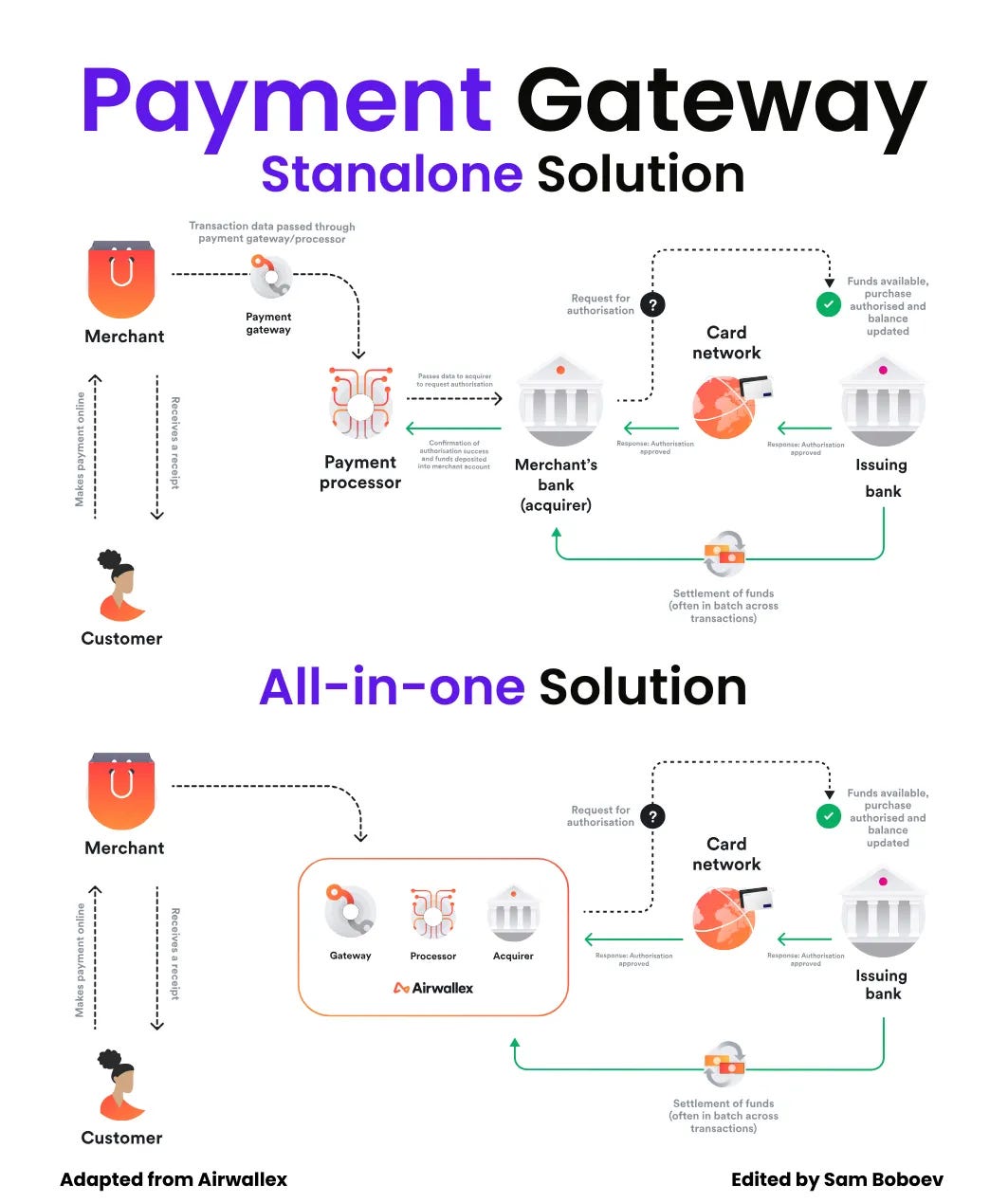
A payment gateway is software that enables businesses to accept and manage payments. It captures customer payment details (card, wallet, etc.), encrypts them, and sends them for processing. While PoS terminals are gateways in-store, the term usually refers to online payments.
Digital payments are growing rapidly, with global transaction value projected to reach $16.62tn by 2028. Gateway choice directly affects conversion, security, and scalability.
____
How it works
- Customer enters payment details at checkout.
- The gateway encrypts the data and sends it to a payment processor (PSP).
- The processor communicates with the card network and issuing bank.
- Approval or decline is returned to the website.
____
Core functions
- Encryption: Secures data in transit (PCI compliance).
- Tokenisation: Replaces card data with secure tokens for storage and reuse.
- Fraud prevention: AVS, CVV, and risk scoring.
- Data insights: Chargebacks, declines, performance metrics.
____
Types of payment gateways
- Hosted: Customer is redirected to the PSP’s page to pay (e.g., Airwallex, PayPal).
- Self-hosted: Payment form on your site; processing handled by PSP (e.g., Stripe, Shopify).
- API-hosted: Direct API integration; full control and no redirects.
- Local bank integration: Customer redirected to bank platform to complete payment (e.g., DBS PayLah).
____
Gateway vs Processor vs Provider
- Gateway: Collects, encrypts, transmits payment data.
- Processor: Routes transactions to banks and card networks.
- Provider: Umbrella term; may bundle gateway, processing, acquiring, and additional services.
Many companies bundle all three into a single stack.
Curated News
💳 Payments
Tech Mahindra Launches Agentic Payments Kit for Telcos
Tech Mahindra has introduced an “agentic payments” toolkit designed to help telecom operators deploy AI-powered payment experiences. The platform enables autonomous payment agents capable of handling transactions, billing interactions, and financial services within telecom ecosystems. The move signals growing convergence between telecom infrastructure, AI automation, and embedded finance.
Source
X Promotes New ‘X Money’ Payments Service
X is rolling out invitations to its upcoming payments product, X Money, with help from celebrity promotions aimed at boosting early adoption. The initiative signals continued progress toward transforming the platform into a “super app” that integrates social media, commerce, and financial services. If successful, it could position X as a competitor in digital wallets and peer-to-peer payments.
Source
Razorpay Curlec Enables Apple Pay for Malaysian Merchants
Razorpay’s Malaysian unit Curlec has launched support for Apple Pay, allowing merchants in the country to accept payments through Apple’s mobile wallet. The integration simplifies checkout for consumers while expanding digital payment acceptance for businesses. It also strengthens Apple Pay’s presence in Southeast Asia’s rapidly growing cashless economy.
Source
Worldline Processes First Wero Online Payment
Payments provider Worldline has completed its first online transaction using Wero, Europe’s emerging pan-European payment solution. The transaction was processed with the Belgian Red Cross, marking an early milestone in the rollout of the initiative. Wero aims to provide a unified European alternative to global card networks and digital wallets.
Source
Traderoot and Halo Dot Partner to Expand SoftPOS Adoption
Traderoot has partnered with Halo Dot to accelerate adoption of SoftPOS technology, which allows smartphones to function as contactless payment terminals. The collaboration will enable merchants to accept card payments without traditional hardware devices. SoftPOS continues to gain traction as a low-cost entry point for digital payment acceptance.
Source
Biometric Payment Cards Advance with Idex and TaluCard Integration
Idex Biometrics’ fingerprint authentication technology has been integrated into TaluCard’s biometric payment card platform. The solution enables cardholders to authenticate transactions using their fingerprint directly on the card. Biometric cards are gaining attention as a way to enhance security and reduce fraud in contactless payments.
Source
🏦 Banking
NatWest Hires Starling Executive to Lead Business Banking
NatWest has recruited Adeel Hyder from Starling Bank to head its business banking division. The appointment reflects increasing competition between incumbent banks and digital challengers for leadership talent. Hyder is expected to help accelerate NatWest’s digital strategy for small and medium-sized businesses.
Source
Standard Chartered Appoints New Global Payments Chief
Standard Chartered has named a former Kinexys co-head as its new global head of payments. The move highlights the bank’s focus on strengthening its cross-border payments capabilities and transaction banking business. Leadership changes at this level often signal broader strategic investments in payments infrastructure.
Source
IFC-Backed Salmon Bank Receives $6.8M Capital Injection
Digital lender Salmon Bank has received a $6.8 million capital injection from its parent company. The funding will support the bank’s expansion and strengthen its balance sheet as it grows its consumer lending operations. The investment underscores continued backing for fintech-driven banking models in emerging markets.
Source
Latin American Neobank Ualá Raises $195M
Argentine neobank Ualá has raised $195 million in fresh funding at a valuation of $3.2 billion. The capital will be used to expand its digital banking and financial services offerings across Latin America. The round reinforces investor confidence in regional neobank growth despite broader fintech funding slowdowns.
Source
🪙 Crypto
Ripple Expands Platform into End-to-End Stablecoin Infrastructure
Ripple is expanding its payments platform into a full stablecoin infrastructure stack after surpassing $100 billion in processed transaction volume. The new capabilities aim to support issuance, custody, and settlement for stablecoin-based payments. The move positions Ripple to play a larger role in institutional digital asset payments.
Source
Morgan Stanley Selects Coinbase and BNY Mellon for Bitcoin ETF Custody
Morgan Stanley has chosen Coinbase and BNY Mellon as custodians for its planned Bitcoin ETF product. The decision reflects the growing institutionalization of crypto infrastructure, with established financial institutions partnering with digital asset specialists. Custody partnerships remain a key component in launching regulated crypto investment vehicles.
Source
Geopolitics and Policy Shifts Reshape the Bitcoin Trade
Analysts say geopolitical tensions and shifting regulatory policies are increasingly influencing Bitcoin trading patterns. Macro-level developments such as sanctions, monetary policy, and global instability are shaping crypto market sentiment. The trend reinforces Bitcoin’s growing role as both a speculative asset and macro hedge.
Source
Standard Chartered to Custody Digital Assets for TP ICAP Platform
Standard Chartered has been appointed digital asset custodian for TP ICAP’s Fusion Digital Assets trading platform. The partnership supports institutional participation in tokenized asset markets by providing regulated custody infrastructure. Traditional banks are increasingly positioning themselves within the digital asset ecosystem.
Source
💼 WealthTech
OneVest Launches AI-Native Wealth Operating System
Wealthtech platform OneVest has unveiled an AI-native operating system designed to automate portfolio management and advisor workflows. The system uses agentic AI to reduce manual processes across wealth operations. The launch reflects a broader industry shift toward AI-driven wealth management infrastructure.
Source
⚖️ Regulation
Fintech Group Warns UK Stablecoin Rules Could Stifle Innovation
Industry body Innovate Finance has warned that proposed Bank of England rules on stablecoins could dampen innovation in the UK fintech sector. The group argues that overly strict requirements may push startups to launch products in more flexible jurisdictions. The debate reflects the ongoing challenge of balancing consumer protection with fintech growth.
Source
Banking Groups Criticize Kraken’s Fed Access
Several U.S. banking organizations have criticized regulators after Kraken reportedly gained access to the Federal Reserve’s payments infrastructure. Critics argue that granting such access to a crypto-linked institution could expose the financial system to new risks. The dispute highlights the deep divide between traditional banking interests and the emerging crypto sector.
Source
📊 Other
PhonePe Targets $10.5B Valuation in Planned IPO
Walmart-backed fintech giant PhonePe is preparing for a public listing in India that could value the company at around $10.5 billion. The IPO would mark one of the largest fintech listings in the region in recent years. Investors are closely watching the move as a signal of renewed momentum in fintech public markets.
Source
Financial Market Infrastructures Map Digital Asset Interoperability
Clearstream, DTCC, and Euroclear have outlined a roadmap for interoperability in digital asset securities infrastructure. The collaboration aims to support wider adoption of tokenized securities across global markets. Coordinated standards among major market infrastructure providers could accelerate institutional participation.
Source
Sweden Encourages Citizens to Hold Cash for Crisis Preparedness
Swedish authorities are encouraging citizens to keep cash on hand as part of national preparedness planning. Officials say physical money could be critical during cyberattacks or wartime disruptions affecting digital payment networks. The guidance highlights the continued importance of cash resilience in highly digital economies.
Source
Disclaimer: Payments Wrap Up aggregates publicly available information for informational purposes only. Portions of the content may be reproduced verbatim from the original source, and full credit is provided with a “Source: [Name]” attribution. All copyrights and trademarks remain the property of their respective owners. Payments Wrap Up does not guarantee the accuracy, completeness, or reliability of the aggregated content; these are the responsibility of the original source providers. Links to the original sources may not always be included. For questions or concerns, please contact us at sam.boboev@fintechwrapup.com.