

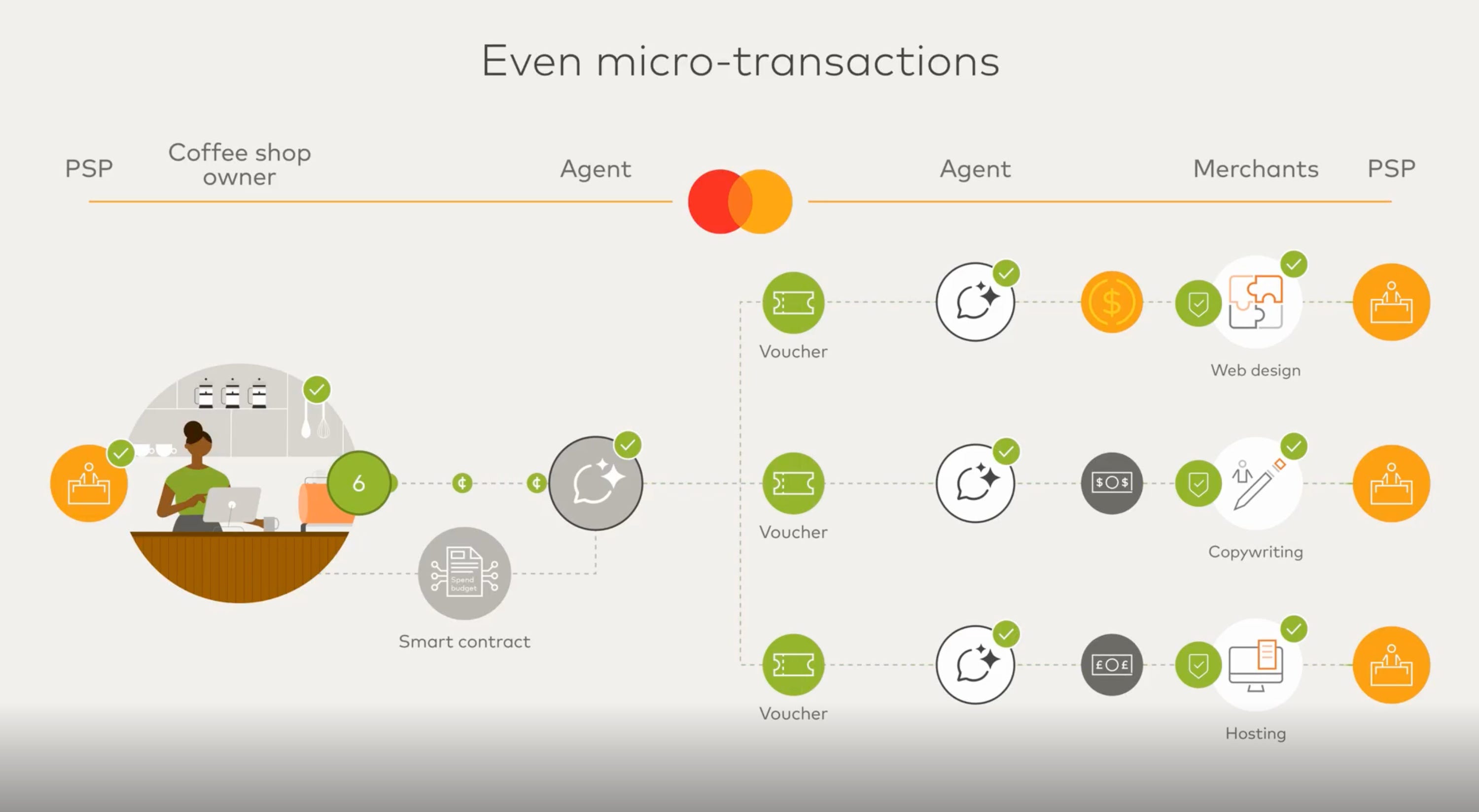
Mastercard is pushing deeper into the future of autonomous payments with the launch of Agent Pay for Machines, a new capability designed to enable devices and AI agents to make real-time, always-on payments without human intervention. The initiative aims to power machine-to-machine commerce across sectors such as mobility, logistics, smart devices, and industrial systems, allowing connected devices to transact instantly and autonomously. The launch signals Mastercard’s broader ambition to shape the infrastructure for programmable commerce, where payments happen seamlessly in the background. This move also places Mastercard at the center of a growing convergence between AI, embedded finance, and payments innovation—three of the most closely watched themes in fintech today. As financial institutions and merchants increasingly prepare for agentic commerce, networks capable of enabling trusted automated transactions could become essential infrastructure. The announcement is likely to spark industry-wide discussion around security, identity, and the role card networks will play in an economy increasingly powered by intelligent machines.
Video of the Day
Insight of the Day
The emerging architecture of on-chain money

The accelerating media coverage of stablecoins, fueled by forecasts of $4 trillion in adoption by 2030 and soaring valuations for independent issuers, has created urgency among corporate and bank leaders. However, transaction data suggests adoption is not as advanced as the broader narrative implies.
Despite strong expectations, global stablecoin activity remains modest relative to global payments. As of early 2026, stablecoin circulation stands at just over $300 billion, with roughly 99 percent denominated in US dollars and 85 percent issued by Circle or Tether. This figure has remained largely flat over the past six months, even as noncash blockchain-based assets, such as Treasury funds and private credit, grew by more than 30%.
Research by Artemis Analytics, highlighted in a recent McKinsey article, estimates that stablecoins supported around $400 billion in organic payment activity in 2025. That remains a tiny share of the quadrillions moving annually through global payment systems. Still, parts of Asia are already seeing meaningful institutional adoption.
Meanwhile, global systemically important banks are already processing far larger volumes through tokenized deposit infrastructures. These flows, estimated at more than $4 trillion annually, exceed stablecoin volumes by an order of magnitude and are embedded directly into institutional payment, liquidity, and treasury operations. More than a dozen banks, including Citibank and BNY, have disclosed live deployments or pilots on proprietary platforms.
JPMorgan Chase’s Kinexys alone is estimated to process more than $1 trillion annually in tokenized deposit transfers, supporting treasury operations, intercompany payments, and institutional settlements. Other large banks with major cross-border businesses are likely processing comparable volumes.
These flows already sit inside existing banking workflows and remain significantly larger than stablecoin-based payments today.
By comparison, tokenized central bank money remains experimental. Early initiatives such as Project Jasper–Ubin showed that cross-border CBDC arrangements raise monetary sovereignty and legal-authority concerns that may require legislative and regulatory changes. Similar pilots in France, Singapore, and Switzerland have explored wholesale use cases but have yet to reach broad commercial deployment. Even optimistic forecasts suggest widespread CBDC adoption remains years away. Still, central bank money remains critical for true settlement finality because it is the only asset that fully removes counterparty risk between banking networks. Without that neutral settlement layer, global finality across disconnected systems remains difficult
Finally, decentralized cryptocurrencies such as Bitcoin have functioned as payment instruments for more than a decade, but volatility, anonymity concerns, and the limited scalability of existing layer-two infrastructure continue to constrain widespread adoption
Curated News
💳 Payments
Visa Pushes Into AI, Stablecoins, and Tokenized Commerce
Visa unveiled a series of new AI, stablecoin, and token innovations at its Payments Forum, highlighting its vision for programmable and intelligent commerce. The announcement reinforces how global payment giants are racing to modernize infrastructure for AI-driven transactions and digital asset interoperability.
Source
Visa Says Fraud Unit Has Prevented $2.6 Billion in Scam Attempts
Visa’s scam disruption unit says it has identified more than $2.6 billion in attempted fraud since launching, underscoring growing payment security concerns amid increasingly sophisticated scams. The update highlights how fraud prevention is becoming a core competitive differentiator for payment networks.
Source
Bamboo and Centiglobe Partner to Simplify Latin America Payments
Bamboo and Centiglobe are teaming up to streamline cross-border payments to and from Latin America, aiming to reduce friction in a region often challenged by fragmented payment rails. The partnership reflects rising demand for faster, more efficient international money movement.
Source
Yellow Card Taps Turnkey to Scale Stablecoin Payments in Emerging Markets
African fintech Yellow Card selected Turnkey to strengthen its stablecoin payments infrastructure across emerging markets. The partnership signals continued momentum for blockchain-powered cross-border payments where traditional banking rails remain costly or inefficient.
Source
Orbital Expands Into the U.S. as Stablecoin Payment Demand Accelerates
Cross-border payments firm Orbital announced plans for U.S. expansion as institutional demand for stablecoin and payment infrastructure grows. The move highlights increasing appetite for regulated digital asset payment solutions among businesses.
Source
Payments Firms Rush Into AI Despite Legacy Infrastructure Challenges
A new report suggests payments firms in the U.S. and U.K. are rapidly deploying AI without modernizing core financial systems, limiting returns on investment. Legacy infrastructure and fragmented data remain major barriers to unlocking AI’s full operational value.
Source
🏦 Banking
Koho Reaches Unicorn Status and Eyes a Banking License
Canadian fintech Koho has reached unicorn status while signaling ambitions to secure a banking license. The move reflects a broader trend of fintechs seeking deeper regulatory positioning to expand products and compete more directly with incumbent banks.
Source
Titan Raises Fresh Funding to Scale Banking-Native AI
Titan secured $3 million in funding to accelerate growth of its AI platform purpose-built for financial institutions. The investment reflects rising demand for banking-specific AI tools designed to automate workflows and improve operational efficiency.
Source
💼 Fintech
Capsa AI Raises $18M to Tackle Private Capital Data Fragmentation
Capsa AI raised $18 million to solve data challenges in private capital markets, where fragmented information often slows decision-making. The funding highlights growing investor appetite for AI solutions focused on financial data infrastructure.
Source
Satispay Targets Growth With €120M Capital Raise
Italian payments fintech Satispay is preparing a €120 million capital increase to fuel expansion and product development. The raise comes as European fintech firms seek scale amid intensifying competition and profitability pressures.
Source
Pleo Introduces Agentic AI for Financial Decision-Making
Expense management platform Pleo announced new agentic AI capabilities aimed at transforming business finance management and decision-making. The move reflects a growing industry shift toward AI copilots capable of automating financial workflows.
Source
Ramp Launches Applied AI Agents for Enterprise Finance Teams
Ramp unveiled new AI-powered tools designed to help enterprises deploy finance-focused AI agents across operations. The launch signals increasing competition among fintech platforms seeking to automate back-office financial work.
Source
Trustap Raises $10M to Build Infrastructure for Agentic Commerce
Trustap raised $10 million to position itself as a trusted infrastructure layer for agentic commerce. As AI agents begin facilitating transactions autonomously, trust, verification, and payment protection are emerging as critical fintech opportunities.
Source
Taskize and Global Relay Team Up on Financial Communications Archiving
Taskize partnered with Global Relay to modernize communications archiving across financial services firms. The collaboration aims to strengthen compliance, operational transparency, and recordkeeping in regulated industries.
Source
🪙 Crypto
Clearstream Launches Next-Generation Digital Securities Infrastructure
Clearstream introduced a new digital securities platform aimed at modernizing post-trade infrastructure and tokenized asset management. The development reflects growing institutional momentum around blockchain-enabled capital markets.
Source
Archax and Hedera Advance Tokenized Securities With Real-Time Cash Flows
Archax and Hedera are collaborating to enable tokenized securities with real-time streaming cash flows. The initiative points to increasing experimentation around programmable financial products and tokenized capital markets.
Source
Digital Asset Raises $355M to Expand Canton Network in Capital Markets
Digital Asset secured $355 million in funding as the Canton Network pushes deeper into institutional finance and capital markets infrastructure. The raise underscores strong investor confidence in blockchain systems built for regulated financial institutions.
Source
Securitize Moves Closer to NYSE Listing
BlackRock-backed tokenization firm Securitize cleared a major hurdle in its path toward going public on the NYSE. The development could mark a major milestone for crypto-native infrastructure firms entering public markets.
Source
Bitcoin Slides Below $60K Amid Crypto Confidence Shock
Bitcoin dropped below $60,000 following strong U.S. jobs data, while a Zcash-related disruption further rattled market confidence. The selloff highlights how macroeconomic signals and ecosystem instability continue shaping crypto volatility.
Source
📈 WealthTech
Plum Launches AI Money Guidance for Personalized Financial Planning
Wealth app Plum introduced an AI-powered money guidance tool designed to generate tailored financial plans in minutes. The launch reflects increasing consumer demand for personalized, AI-enabled financial advice.
Source
⚖️ Regulation
FSB Opens Consultation on Responsible AI Adoption in Finance
The Financial Stability Board launched a consultation on best practices for responsible AI adoption in financial services. The effort signals growing regulatory focus on balancing innovation with governance, risk management, and consumer protection.
Source
Fragmented Beneficial Ownership Data Hampering Financial Crime Prevention
A new report warns that fragmented beneficial ownership data is weakening efforts to combat financial crime and improve transparency. The findings may increase pressure for stronger global data-sharing and compliance frameworks.
Source
Disclaimer: Payments Wrap Up aggregates publicly available information for informational purposes only. Portions of the content may be reproduced verbatim from the original source, and full credit is provided with a “Source: [Name]” attribution. All copyrights and trademarks remain the property of their respective owners. Payments Wrap Up does not guarantee the accuracy, completeness, or reliability of the aggregated content; these are the responsibility of the original source providers. Links to the original sources may not always be included. For questions or concerns, please contact us at sam.boboev@fintechwrapup.com.