

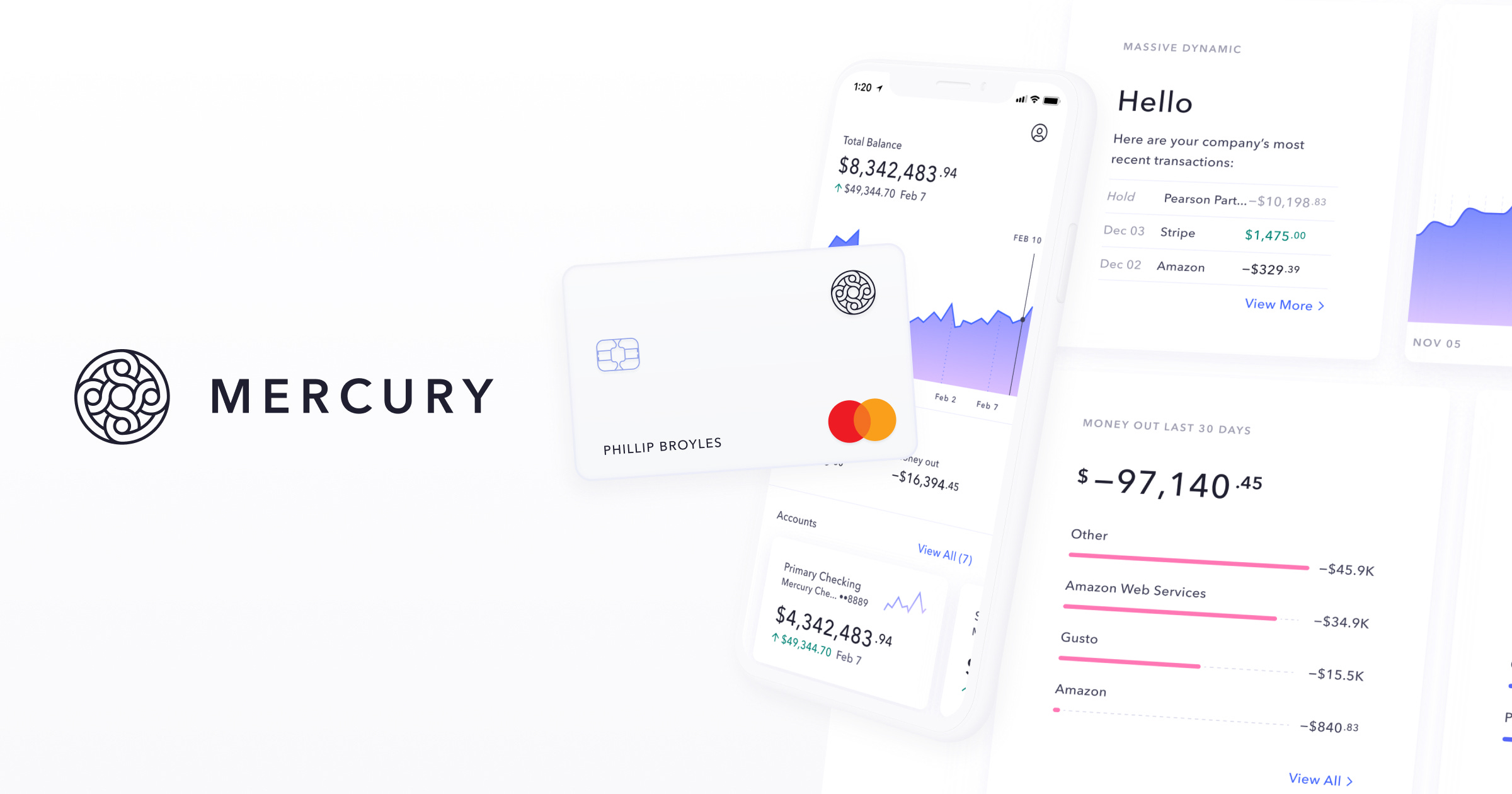
Mercury secured $200 million in Series D funding at a $5.2 billion valuation, marking one of the biggest fintech funding rounds of the year. The raise signals renewed investor confidence in high-growth fintech infrastructure platforms after an extended period of market caution and tighter capital conditions. Mercury has rapidly evolved from a startup-focused banking platform into a broader financial operating system serving businesses across payments, treasury, and cash management. The funding round also highlights how investors continue to prioritize fintech firms with strong product ecosystems, scalable infrastructure, and growing enterprise adoption. As competition intensifies across business banking and embedded finance, Mercury’s latest raise positions the company to expand product capabilities and strengthen its market leadership. The announcement stands out as an important signal that high-quality fintech companies are still attracting major institutional backing despite broader funding slowdowns. Overall, the deal reinforces the growing importance of digital-first financial infrastructure in shaping the next generation of business banking.
Video of the Day
Insight of the Day
The BaaS Wreckage and Regulatory Thaw That Cleared the Way for Nubank’s US Entry

The most important idea in this report is not Nubank’s entry. It is that failure removed optionality.
The BaaS model did not evolve. It collapsed under its own structure. Compliance was fragmented, ownership was unclear, and when stress hit, no single entity could answer for the system. The Synapse failure exposed this directly: money, ledger, and responsibility were split across parties that could not reconcile reality when it mattered .
That is not a product failure. That is a design failure.
What followed was predictable. Regulators did not just tighten rules. They forced a reversion to clear ownership. The system moved from distributed responsibility back to vertically integrated accountability.
At the same time, the co-branded model failed for a different reason. Economics, not compliance. Banks funded risk they did not control, while fintechs controlled distribution without holding balance sheet consequences. The result was mispriced risk and sustained losses. When the assumptions broke, the partnerships unwound.
Two different models. Same outcome. Misalignment between control and responsibility.
The key shift is what survived.
The licensed digital bank model did not win because it is more innovative. It won because it is structurally coherent. One entity holds the charter, the balance sheet, the compliance, and the customer. That alignment is what regulators can supervise and what markets can price.
Everything else was filtered out.
The report frames this as a “regulatory thaw,” but the more accurate framing is a reset. The system cleared unstable abstractions before allowing new entrants. Nubank did not just arrive at the right time. It avoided every failure mode before the reset happened .
That is the real advantage.
Most foreign neobanks tried to enter the US through sponsor banks and middleware because it was faster and cheaper. That path is now structurally closed. It capped product scope, prevented balance sheet ownership, and ultimately blocked unit economics. The exits of players like N26 and Monzo were not execution failures. They were structural dead ends .
So the market did not open. It narrowed.
What looks like increased opportunity is actually increased constraint. Fewer players can compete because the bar is now a full-stack bank, not a distribution layer on top of one.
Nubank’s entry only makes sense in that context. It is not testing the US with a lightweight model. It is entering with a charter, its own infrastructure, and a proven credit engine. That is a different category of participant.
The implication is straightforward.
The fintech stack is compressing back into fewer, more integrated layers. The era of loosely coupled financial infrastructure is ending under regulatory pressure. Ownership, not orchestration, is becoming the dominant model again.
The BaaS collapse did not slow innovation. It forced it into a form that can survive scrutiny.
Curated News
💳 Payments
Mastercard Cracks Down on Fake Online Storefronts
Mastercard launched new efforts to combat fraudulent online storefronts targeting consumers and merchants. The initiative reflects increasing pressure on payment networks to strengthen fraud prevention and digital commerce trust.
Source
Getnet Pushes ‘Invisible Payments’ Strategy
Santander-owned Getnet highlighted invisible payments as a major strategic growth opportunity. The company is focusing on embedded and frictionless payment experiences as digital commerce evolves.
Source
Zip US Expands Flexible Payments Into Gift Cards
Zip US partnered with InComm Payments to bring flexible payment options to gift card purchases. The move reflects continued expansion of BNPL and installment-based payment solutions into new retail segments.
Source
Treasury Prime Launches Nationwide Cash Deposit Solution
Treasury Prime introduced Prime Cash, enabling nationwide cash deposit capabilities for fintech and banking partners. The launch strengthens infrastructure connecting digital financial platforms with physical cash networks.
Source
Primer Raises $100M to Bring AI Into Payments
Primer secured $100 million in Series C funding to accelerate AI-powered payment infrastructure and expand in the U.S. market. The raise highlights rising investor interest in AI-native commerce and payment orchestration platforms.
Source
TreviPay Highlights AI-Driven Shift in B2B Purchasing
TreviPay research found AI is increasingly reshaping buyer expectations across B2B commerce and payments. The findings suggest businesses are demanding faster, more personalized purchasing experiences powered by automation.
Source
🏦 Banking
JPMorgan Launches Digital Retail Bank in Germany
JPMorgan officially launched its digital retail banking operation in Germany, expanding its consumer banking ambitions in Europe. The move signals intensifying competition between global banks and digital-first challengers.
Source
Grab Takes Control of Indonesia’s Superbank
Grab increased its stake in Indonesia’s Superbank, deepening its push into digital banking and embedded finance across Southeast Asia. The acquisition strengthens Grab’s regional fintech ecosystem strategy.
Source
BankSouth Modernizes Core Banking With FIS
BankSouth selected FIS’s core banking platform to modernize operations and improve AI readiness. The transition highlights continued investment in cloud-native banking infrastructure.
Source
National Bank of Canada Enhances Fraud Protection With Sardine
National Bank of Canada partnered with Sardine to improve fraud prevention and digital banking security operations. The collaboration reflects increasing focus on AI-driven risk management in banking.
Source
🚀 Fintech
Google Builds AI Shopping Cart That Buys Automatically
Google unveiled an AI-powered shopping cart capable of autonomously completing purchases for users. The launch highlights how AI agents are increasingly becoming integrated into commerce and financial decision-making.
Source
AI Could Automate Half of Financial Services Tasks
New research suggests AI may automate up to 50% of tasks across most financial services roles. The findings reinforce growing industry expectations around operational transformation and workforce restructuring.
Source
🪙 Crypto
Euro Stablecoin Initiative Adds 25 More Banks
A major euro stablecoin project added 25 additional banking partners as institutional interest in digital currencies continues growing across Europe. The expansion highlights accelerating momentum around regulated stablecoin infrastructure.
Source
Germany’s AllUnity Pushes AI Agent Payments and Stablecoins
AllUnity announced plans for a Swedish krona stablecoin while expanding into AI-driven agentic payment systems. The move reflects growing convergence between autonomous AI commerce and blockchain payments infrastructure.
Source
Tether Expands Control Over Bitcoin Treasury Firm Twenty One
Tether strengthened its position in Bitcoin treasury firm Twenty One through a SoftBank-related buyout deal. The transaction reinforces Tether’s growing influence across institutional crypto infrastructure.
Source
Crypto Custody Firm Copper Explores $500M Sale
Crypto custody provider Copper is reportedly seeking a buyer in a deal valued around $500 million. The discussions highlight ongoing consolidation trends within institutional crypto infrastructure.
Source
Ethereum Foundation Departures Spark Industry Debate
High-profile exits from the Ethereum Foundation triggered renewed debate around Ethereum governance and long-term ecosystem direction. The discussions underscore ongoing scrutiny surrounding leadership in major blockchain networks.
Source
SpaceX IPO Filing Reveals $1.45B Bitcoin Position
SpaceX’s IPO filing revealed the company holds approximately $1.45 billion in Bitcoin. The disclosure highlights continued institutional adoption of digital assets among major private companies.
Source
Variational Raises $50M for Crypto Trading Infrastructure
UK-based crypto trading startup Variational secured $50 million in Series A funding. The investment reflects continued demand for institutional-grade trading infrastructure in digital assets.
Source
📈 WealthTech
InvestiFi Brings Embedded Investing to Tucson Federal Credit Union
Tucson Federal Credit Union partnered with InvestiFi to embed digital investing tools directly into banking experiences. The move reflects growing demand for integrated wealth management within traditional financial platforms.
Source
⚖️ Regulation
Trump Urges Fed to Consider Fintech Access to Payment Accounts
Donald Trump called on the Federal Reserve to consider expanding fintech access to payment accounts. The comments reignite debates around fintech competition, banking access, and financial infrastructure policy.
Source
California Says Yotta Misled Customers Before Synapse Collapse
California regulators accused Yotta of misleading customers ahead of the Synapse collapse. The allegations increase scrutiny around fintech partnerships, customer protections, and operational transparency.
Source
Disclaimer: Payments Wrap Up aggregates publicly available information for informational purposes only. Portions of the content may be reproduced verbatim from the original source, and full credit is provided with a “Source: [Name]” attribution. All copyrights and trademarks remain the property of their respective owners. Payments Wrap Up does not guarantee the accuracy, completeness, or reliability of the aggregated content; these are the responsibility of the original source providers. Links to the original sources may not always be included. For questions or concerns, please contact us at sam.boboev@fintechwrapup.com.