

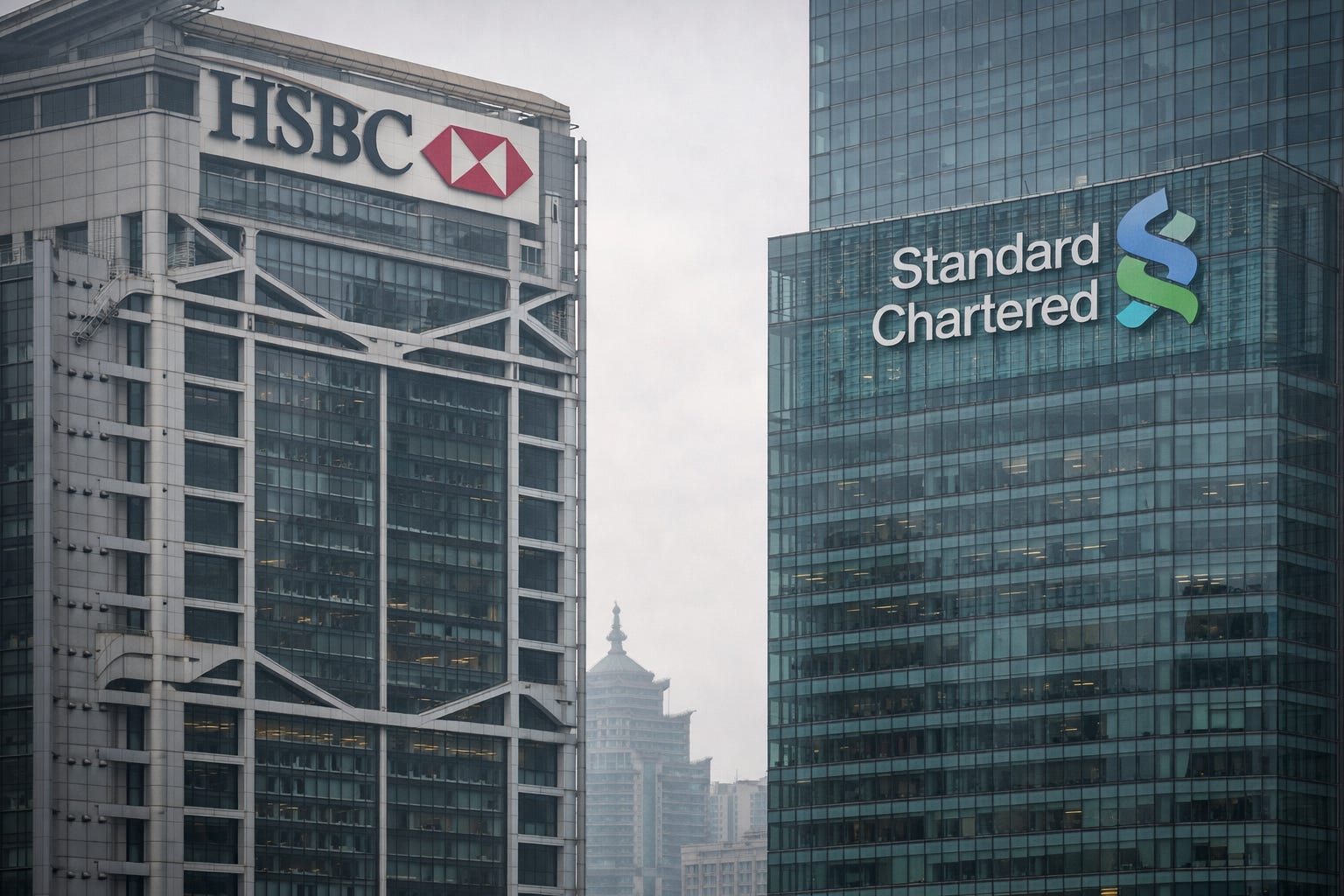
Standard Chartered and HSBC have completed the first live transaction involving tokenised deposits on Swift’s blockchain-based ledger. The milestone brings together two major global banks and the world’s dominant cross-border financial messaging network, giving blockchain-based deposits a significant institutional endorsement. Tokenised deposits could allow banks to move money across borders with greater speed and programmability while maintaining the connection to commercial banking infrastructure. The fact that the transaction is taking place on Swift’s own blockchain-based infrastructure makes this particularly significant for the future of cross-border payments. It also shows that major banks are increasingly moving from blockchain experiments toward live financial applications. For fintech and payments, the development is another strong signal that tokenisation is moving closer to mainstream financial infrastructure.
Video of the Day
Insight of the Day
Non-banks are winning business banking

BCG’s sharpest point is that SMB deposit loss shows up as fragmentation, not switching. A business keeps its checking account at the incumbent bank while payroll runs through Gusto, invoicing runs through a vertical SaaS tool, and working capital comes from Mercury or a lending-led fintech. Banks watching for primary-bank switching miss this entirely, because by the time it shows up in the data, the relationship has already been hollowed out. That’s a genuinely useful diagnostic and probably the paper’s best contribution.
The five-archetype breakdown of competitors (lending-led, deposits-and-payments-led, specialized business services, digital challenger banks, large tech/ISVs) is also worth using internally. Most bank strategy documents treat “fintech competition” as one blob, when in practice a bank’s lending team, payments team, and digital team are each fighting different opponents with different playbooks.
The branch-as-advantage argument is the part I’d question most. Exhibit 4’s survey data, showing trust and branch staff ranking above rates and rewards, comes from existing bank customers. That’s a selection problem: it can’t capture SMBs who already left, or younger founders who never valued a branch relationship at all. The industries BCG flags as highest-risk (tech, media, professional services) are also probably the least branch-loyal segments, and the paper doesn’t really square that.
The stablecoin section is appropriately cautious given that only about a tenth of stablecoin supply is currently tied to real-economy payments. But this is also the section likeliest to go stale quickly, given how fast B2B payment rails are adopting stablecoin infrastructure right now.
Finally, the defense/offense playbook is strong on strategy but thin on execution. It doesn’t address how a mid-sized regional bank, without fintech-level engineering resources, actually decides between building, partnering, or acquiring to close this gap.
Curated News
💳 Payments
Visa and Mastercard Join Rain’s Agentic Commerce Coalition
Visa and Mastercard have joined Rain’s Agentic Commerce Coalition, bringing two of the world’s biggest payment networks into the push toward AI-driven commerce. The move highlights growing industry efforts to build payment infrastructure that can support transactions initiated by autonomous AI agents.
Source
ShopeePay Expands QR Payments Into China
ShopeePay users can now make QR payments in China, extending the wallet’s usefulness for cross-border commerce. The expansion gives users a more convenient way to pay while travelling and strengthens ShopeePay’s regional payments footprint.
Source
Ripple Payments Adopted by Jeonbuk Bank for Cross-Border Transfers
Jeonbuk Bank has adopted Ripple Payments for cross-border transfers. The integration highlights continued adoption of blockchain-based payment infrastructure by traditional financial institutions.
Source
Eskimo Adds Stablecoin Payments for Global eSIM Plans
eSIM provider Eskimo is adding stablecoin payments through Triple-A for its global plans. The move shows how stablecoins are increasingly being used for practical international payments rather than solely for trading and investment.
Source
Nium Launches Card Issuance in the U.S.
Nium has launched card issuance capabilities in the United States. The expansion strengthens its global payments infrastructure and gives businesses another way to build card-based financial products.
Source
🏦 Banking
Revolut Plans Airport Lounge Network Across Europe
Revolut plans to open a network of airport lounges across Europe as it expands its premium lifestyle offering. The move shows digital banks increasingly competing through travel and lifestyle benefits alongside traditional financial products.
Source
Ant International Launches AI Model to Forecast FX Risk
Ant International has launched an AI model designed to forecast foreign-exchange risk. The initiative demonstrates how major fintech platforms are using AI to tackle complex financial-management and treasury challenges.
Source
💼 Fintech
Klarna Shares Fall After Lowered Guidance
Klarna shares fell after the company lowered its guidance, while Affirm also dipped on the news. The reaction highlights how closely public-market investors are watching the performance and outlook of major consumer-fintech companies.
Source
Navi Raises $100M Ahead of Planned IPO
Indian fintech Navi is set to raise $100 million ahead of a planned IPO. The funding gives the company additional capital while positioning it for a potential public-market debut.
Source
Kita Raises $4.5M for AI Credit Underwriting
AI startup Kita has raised $4.5 million in seed funding, with Y Combinator participating. The company is targeting credit underwriting, highlighting the growing use of AI to automate and improve financial risk assessment.
Source
YouLend and comrce Bring Embedded Capital to German Merchants
YouLend and comrce are partnering to bring embedded capital to e-commerce merchants in Germany. The collaboration gives merchants access to financing directly within their commercial workflows, continuing the shift toward embedded financial services.
Source
Basware Turns $10T in Transaction Data Into Financial Intelligence
Basware is using $10 trillion in transaction data to develop new intelligence for finance teams. The initiative highlights the growing value of transaction data as fintech companies turn large datasets into actionable financial insights.
Source
🪙 Crypto
Kraken Launches Cashback Debit Card in the U.S.
Kraken has launched a cashback debit card in the U.S., bringing crypto rewards into everyday spending. The product is another example of crypto platforms expanding beyond trading and into mainstream consumer financial services.
Source
Kalshi Expands Beyond Prediction Markets With Copper Perpetual Futures
Kalshi is moving beyond traditional prediction markets with copper perpetual futures. The expansion shows the platform increasingly positioning itself as a broader trading venue rather than a niche prediction-market operator.
Source
Crypto Stocks Rally as Strategy and Coinbase Surge
Crypto-linked stocks rallied sharply, with Strategy jumping 12% and Coinbase climbing 9%. The move highlights renewed investor appetite for publicly traded companies with significant exposure to the digital-asset market.
Source
Coinbase Adds 50x Crypto Perpetuals to Base App
Coinbase has added 50x crypto perpetuals to its Base App through Hyperliquid. The launch expands the app’s trading capabilities and brings more sophisticated derivatives directly into Coinbase’s broader consumer ecosystem.
Source
Bitget Launches Fixed-Coupon Notes for U.S. Stock rTokens
Bitget has launched fixed-coupon notes linked to U.S. stock rTokens. The product further blurs the boundary between traditional securities and crypto-based investment infrastructure.
Source
📈 WealthTech
Keenai Launches All-in-One Wealth Platform
Singapore’s Keenai has launched a wealth platform combining public markets, private funds and insurance in a single account. The model reflects growing demand for consolidated wealth-management platforms that bring traditionally fragmented investments under one roof.
Source
TMX Completes Acquisition of RAFI Indices
TMX Group has completed its acquisition of RAFI Indices. The deal expands TMX’s index capabilities and strengthens its position in investment and financial-market infrastructure.
Source
Investors Look for Asset-Class Parity With Nature-Based Solutions
Investors are exploring how nature-based solutions can achieve genuine parity with established asset classes. The trend reflects growing interest in investment opportunities tied to environmental and nature-related assets.
Source
Disclaimer: Payments Wrap Up aggregates publicly available information for informational purposes only. Portions of the content may be reproduced verbatim from the original source, and full credit is provided with a “Source: [Name]” attribution. All copyrights and trademarks remain the property of their respective owners. Fintech Wrap Up does not guarantee the accuracy, completeness, or reliability of the aggregated content; these are the responsibility of the original source providers. Links to the original sources may not always be included. We use AI tools to brainstorm, draft, edit, and summarize, but the ideas, analysis, and connections Sam draws are his. Every piece is verified and written in Sam’s voice. For questions or concerns, please contact us at sam.boboev@fintechwrapup.com.