

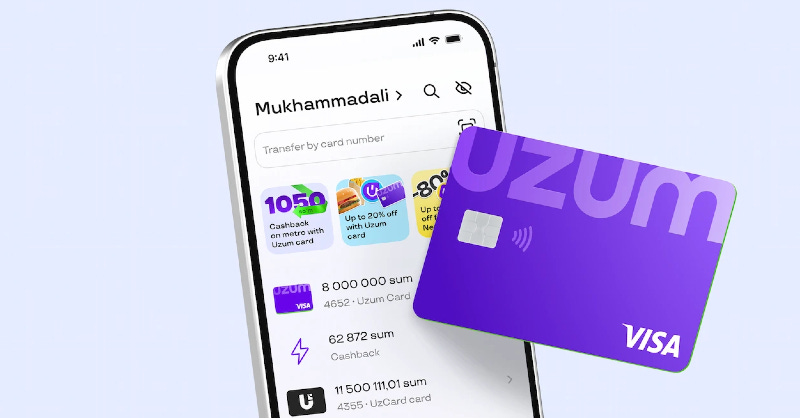
Uzbekistan-based fintech and e-commerce ecosystem Uzum has raised $130 million in fresh funding led by sovereign investors from Oman, marking one of the largest fintech investments in Central Asia. The funding will support expansion across Uzum’s integrated ecosystem, which includes digital payments, marketplace services, and consumer financial products. By strengthening its fintech infrastructure, the company aims to accelerate cashless payments and broaden access to digital financial services across the region. Uzbekistan’s rapidly digitizing economy has created strong demand for super-app style platforms that combine commerce and finance in a single ecosystem. Uzum is positioning itself as a regional fintech leader by building payments, lending, and marketplace capabilities under one platform. The new capital also signals growing international investor confidence in Central Asia’s emerging fintech market. If momentum continues, Uzum could become a major driver of financial inclusion and digital commerce across the region.
Video of the Day

Insight of the Day
The Hidden Risk of Agentic Commerce for Merchants

Your customer’s AI agent books a flight, reserves a hotel, and orders dinner—autonomously, in seconds.
That future is arriving fast. And while most discussions of agentic commerce focus on fraud, authorization, and consent, one risk is often underestimated by merchants: being locked into a single provider’s tokenization model.
As agents begin initiating transactions at scale, the way agent intent, consent, and identity are tokenized becomes a long-term architectural decision, not an implementation detail.
____
Why agentic commerce raises the stakes
Merchants are already asking practical questions:
● How do we verify an agent’s identity?
● How do we enforce intent and spending limits?
● Who is liable when something goes wrong?
All of these questions ultimately converge on tokenization.
____
Why tokenization matters—and why ownership matters more
In a traditional transaction, tokenization replaces sensitive card data with surrogate credentials. In agentic commerce, those tokens multiply, capturing more data points like:
● The specific merchant or supplier authorized to transact
● Defined limits on amount, time, or transaction type
● The ability to revoke credentials instantly when risk signals change
● A direct link to agent identity for auditability and dispute resolution
But not all tokenization solves the lock-in problem.
PSP-bound tokens tie you to a single provider. If you change acquirers, reroute transactions, or expand into new markets, you’re forced to re-tokenize introducing friction, cost, and risk.
____
Independent tokenization changes the equation
With independent tokenization, merchants—not PSPs—control the tokens. That enables teams to:
● Switch payment providers without customer impact
● Route transactions based on cost, performance, or geography
● Combine network tokens with agent-level controls
● Maintain consistent governance across regions
● Reduce PCI DSS scope dramatically
For industries like travel and retail, this is critical. A single agent-driven trip may require multiple supplier-specific tokens, defined intent parameters, regional routing, and real-time fraud decisions tied to agent behavior—not just cardholder data.
____
How merchants can prepare
Agentic commerce is moving fast. Network initiatives like Mastercard Agent Pay, Visa’s trusted agent programs, and emerging open protocols are already shaping how AI agents transact.
For merchants, preparation comes down to flexibility and control.
Payment infrastructure should allow agents to operate without binding identity, intent, and consent to a single provider. Independent tokenization gives merchants that flexibility—making it possible to adapt to new agent standards, change providers, and optimize routing without disrupting customers or workflows.
Curated News
💳 Payments
myPOS Expands Tap-to-Pay on iPhone Across Europe
myPOS has expanded its Tap-to-Pay on iPhone capability across multiple European markets, enabling merchants to accept contactless payments directly from their smartphones. The move eliminates the need for additional POS hardware, lowering barriers for small businesses to adopt digital payments and accelerating mobile-first merchant acceptance.
Source
SquareFi Launches Stablecoin Infrastructure for Cross-Border B2B Payments
SquareFi has introduced a stablecoin-based infrastructure designed to streamline cross-border B2B payments. By leveraging blockchain rails, the platform aims to reduce settlement times and costs for international transactions, signaling continued fintech innovation in global payment networks.
Source
AAZZUR and Wallester Partner to Expand Card Issuing in Europe
AAZZUR has partnered with Wallester to enhance card issuing capabilities within its fintech orchestration platform. The collaboration allows fintechs and enterprises to launch payment cards faster while simplifying regulatory and infrastructure complexity across European markets.
Source
YouHodler Integrates Volt for Real-Time Payments in Europe
Crypto-fintech platform YouHodler has partnered with open banking provider Volt to enable instant account-to-account payments for deposits and withdrawals across the EU. The integration supports faster fiat-to-crypto conversions and improves user experience for digital asset traders.
Source
🏦 Banking
BBVA Deploys AI Assistant to Boost Internal Audit Efficiency
Spanish banking giant BBVA has introduced an AI-powered assistant to improve productivity within its internal audit teams. The tool automates data analysis and reporting tasks, allowing auditors to focus more on risk assessment and strategic oversight.
Source
NCR Atleos Improves ATM Uptime Through Advanced Service Innovation
NCR Atleos reported delivering 5.8 million hours of ATM availability through enhanced monitoring and maintenance technologies. The initiative highlights how infrastructure optimization remains critical for banks seeking reliable cash access while modernizing ATM networks.
Source
🧠 Fintech
Mastercard Introduces AI “Virtual C-Suite” for Small Businesses
Mastercard is advancing its agentic AI strategy with a “Virtual C-Suite” designed to give small businesses executive-level financial insights. The AI-driven system helps merchants analyze spending, forecast growth, and make strategic decisions using Mastercard’s payment data ecosystem.
Source
Mirakl and J.P. Morgan Payments Enable Agentic Commerce
Mirakl has partnered with J.P. Morgan Payments to power “agentic commerce,” allowing AI agents to autonomously execute transactions within enterprise marketplaces. The collaboration reflects the growing role of AI-driven automation in digital commerce infrastructure.
Source
Outpost Raises $17.5M to Simplify Global E-Commerce Expansion
Outpost has secured $17.5 million in funding to help merchants sell internationally without building local logistics or compliance infrastructure. Its platform manages cross-border payments, taxes, and fulfillment, lowering barriers for global commerce.
Source
Finova Launches AI Broker Assistant for Mortgage Industry
Finova introduced “Broker Assist,” an AI agent designed to streamline mortgage broker workflows. The tool automates data retrieval and customer insights, helping brokers deliver faster and more efficient lending services.
Source
Iliad Solutions and Wipro Form Strategic Partnership
Fintech testing specialist Iliad Solutions has partnered with Wipro to enhance payment testing services for financial institutions worldwide. The collaboration aims to strengthen reliability and compliance in complex payment ecosystems.
Source
🪙 Crypto
Circle Could Gain 60% Upside as Stablecoin Adoption Grows
Analysts at Bernstein suggest Circle’s valuation could rise significantly as stablecoins become central to digital payments and emerging AI-driven financial systems. The report highlights the growing institutional interest in stablecoin infrastructure.
Source
Ripple Seeks Australian License to Expand Regional Payments
Ripple is applying for a financial services license in Australia to expand its blockchain-based cross-border payments network. The move is part of the company’s broader strategy to strengthen regulatory positioning and grow its presence in the Asia-Pacific market.
Source
Bitwise Predicts Long-Term Path Toward $1M Bitcoin
Asset manager Bitwise argues that Bitcoin could eventually reach $1 million per coin, driven by institutional demand and its role as a digital store of value. The outlook reflects increasing mainstream adoption of crypto as a macro financial asset.
Source
Broadridge and Crypto.com Enable Global Crypto Order Routing
Broadridge has partnered with Crypto.com to allow brokers to route digital asset orders globally via the NYFIX network. The integration bridges traditional brokerage infrastructure with crypto trading venues.
Source
💼 WealthTech
WealthAi and Stratiphy Partner on AI Portfolio Solutions
WealthAi and Stratiphy have partnered to deliver AI-driven portfolio management solutions for asset managers and family offices. The platform aims to enhance investment decision-making through advanced analytics and automation.
Source
Orange Investment Advisors Modernizes Operations with Clearwater Analytics
Orange Investment Advisors has implemented Clearwater Analytics to modernize its investment operations from front to back office. The upgrade improves data transparency, reporting, and operational efficiency for institutional asset management.
Source
⚖️ Regulation
China’s Supreme Court Warns of Harsher Penalties for Crypto Crimes
China’s Supreme Court has signaled stricter enforcement against crypto-related financial crimes, including fraud and illegal fundraising. The move reinforces the country’s tough stance on digital assets while targeting illicit financial activities.
Source
🌐 Other
X’s Digital Payment System Moves Closer to Launch
Elon Musk’s platform X is preparing to begin testing its digital payment system next month as part of its vision to become an “everything app.” The payments feature could allow peer-to-peer transfers and creator monetization directly within the platform.
Source
Disclaimer: Payments Wrap Up aggregates publicly available information for informational purposes only. Portions of the content may be reproduced verbatim from the original source, and full credit is provided with a “Source: [Name]” attribution. All copyrights and trademarks remain the property of their respective owners. Payments Wrap Up does not guarantee the accuracy, completeness, or reliability of the aggregated content; these are the responsibility of the original source providers. Links to the original sources may not always be included. For questions or concerns, please contact us at sam.boboev@fintechwrapup.com.