

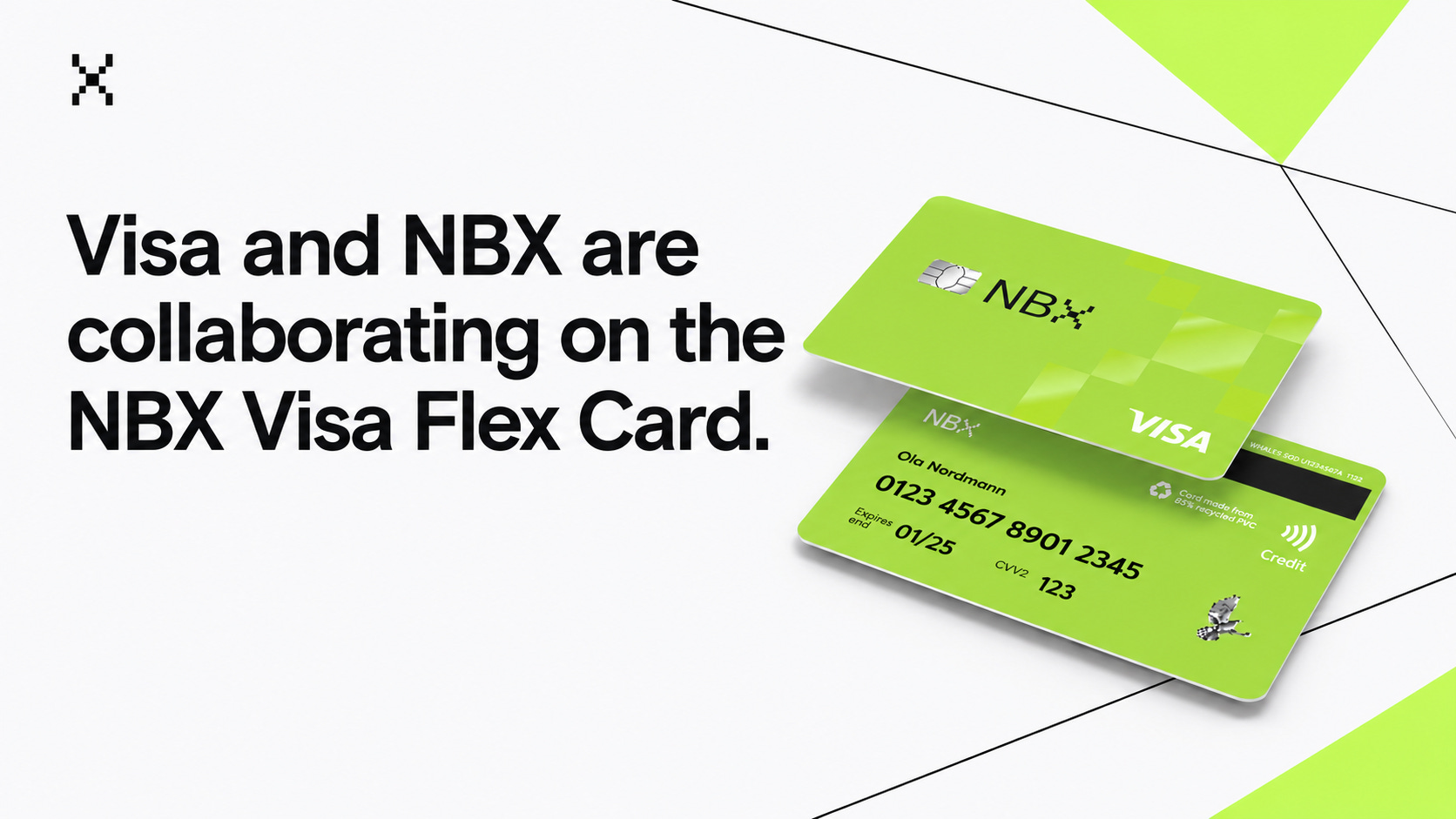
Visa and NBX are joining forces to make stablecoins more accessible and practical for everyday spending, bringing digital assets closer to the payment experiences consumers already know. The initiative reflects a broader shift in the fintech industry towards connecting blockchain-based assets with established payment networks, potentially reducing friction between digital currencies and traditional commerce. By focusing on real-world spending, the collaboration highlights how stablecoins could move beyond trading and investment into more routine financial transactions. It also reinforces Visa’s continued interest in expanding the role of digital assets within mainstream payment infrastructure, as financial institutions and fintech companies explore new ways to make blockchain-powered payments more useful to consumers
Video of the Day
Insight of the Day
What is a large transaction model?

The rapid rise of Generative AI (GenAI) and Large Language Models (LLMs) has ushered in a new era of technological transformation. While LLMs have revolutionized how we interact with information, automating tasks like drafting emails, summarizing documents, generating creative content, and replacing traditional search engines, they’re also being rapidly adopted by bad actors for advanced fraud.
However, by embracing the underlying principles and technology behind LLMs, the financial industry can bolster traditional fraud detection with an ability to learn, adapt, and protect at scale.
Large Transaction Models (LTMs) represent this transformative technologic leap in AI-powered fraud prevention. Just as LLMs learn the patterns and context of human language to predict and generate text, a new class of AI, LTMs, is emerging to understand the language of commerce. Applying the same principles and technology as LLMs, LTMs can help predict legitimate activity, spot anomalies, and adapt to evolving fraud tactics with unprecedented accuracy. Critically, LTMs don’t replace existing fraud strategies, they supercharge them.
With LTMs, we’re not talking about your typical AI model. While most fraud models assess risk and predict outcomes, LTMs help create a foundational understanding that can be used to accelerate and amplify traditional fraud model performance.
Simply put, an LTM, or payments foundation model, is a sophisticated AI model designed to understand the “language” of commerce. Similar to LLMs trained on vast amounts of text to learn grammar and context, allowing it to predict the next word in a sentence, LTMs are generally trained on billions of anonymized transaction sequences. This transaction sequence training helps enable an LTM to predict the next transaction in a sequence and learn the intricate patterns, rhythms, and relationships that define legitimate commercial activity.
The architecture powering LTMs
To process vast amounts of transaction data and understand this “language” of commerce, LTMs utilize the same cutting-edge transformer architecture used in leading LLM. This innovative transformer architecture brings new advantages to traditional fraud prevention models commonly used today. Machine learning has long been central to payment fraud detection.
Traditional models using Gradient Boosted Trees (GBT) deliver efficient risk scoring by relying on predefined, engineered features from raw data. Although they depend heavily on manual feature engineering, GBTs are valued for handling non-linear relationships, managing outliers and missing values, and adapting as new threats emerge.
Curated News
💳 Payments
AfricaNenda Foundation Launches State of Inclusive Payments in Africa 2026
AfricaNenda Foundation has launched its 2026 report on inclusive payments across Africa. The report brings attention to the development of accessible payment infrastructure and the progress of financial inclusion across the continent.
Source
Prime Bank, Lloyds, and Enigio Scale UK-Bangladesh Digital Trade to Everyday Operations
Prime Bank, Lloyds, and Enigio are expanding digital trade operations between the UK and Bangladesh. The development signals continued adoption of digital documentation and infrastructure in cross-border trade.
Source
Turrón by Plazo Expands Card-Based BNPL Offering in Spain
Turrón by Plazo is expanding its card-based buy now, pay later offering in Spain. The move adds to competition in the European BNPL market and broadens access to instalment-based payment options.
Source
Klarna Expands Price Comparison Tool Across Europe to Help Shoppers Shop Smarter
Klarna is expanding its price comparison tool across European markets. The move strengthens its shopping and commerce offering by helping consumers compare prices and make more informed purchasing decisions.
Source
Borderless AI Introduces Stablecoin Payments for Global Teams
Borderless AI has introduced stablecoin payments designed for globally distributed teams. The offering reflects growing interest in using digital assets to support international payments and cross-border business operations.
Source
🏦 Banking
Highnote Files for National Bank Charter
Highnote has filed an application for a national bank charter, marking a significant step in its potential expansion into regulated banking. The development reflects the continued interest among fintech companies in obtaining direct banking capabilities.
Source
Salt Edge and Neumetria Partner to Give Financial AI Agents and Lenders a Current, Cross-Bank View of Each Customer
Salt Edge and Neumetria have partnered to provide financial AI agents and lenders with a consolidated view of customers’ financial information across banks. The collaboration highlights the role of open banking data in supporting more informed financial services and AI-driven decision-making.
Source
Boerse Stuttgart Digital Opens Second Headquarters in Frankfurt
Boerse Stuttgart Digital has opened a second headquarters in Frankfurt. The expansion underscores the company’s continued development of its digital asset business and presence in Germany’s financial ecosystem.
Source
KakaoBank Taps Mistral to Build Custom Banking AI Models
KakaoBank is partnering with Mistral to develop AI models tailored to banking. The initiative reflects growing investment by financial institutions in specialized AI capabilities for their operations and services.
Source
💼 Fintech
Inverite Launches Portfolio IQ, Expanding Financial Intelligence Across the Lending Lifecycle
Inverite has launched Portfolio IQ, a platform designed to expand financial intelligence across the lending lifecycle. The launch highlights continued development of data-driven tools for lenders and credit decision-making.
Source
EU-INC Is in Crisis but $1M-Backed Shuttle Isn’t Waiting for Europe to Fix Cross-Border Fundraising
Shuttle is pursuing its cross-border fundraising ambitions despite challenges facing the EU-INC initiative. Backed by $1 million, the company is positioning itself around a persistent problem for European startups seeking investment across borders.
Source
BofE Says Firms Need to Invest to Keep Pace with AI Threat
The Bank of England has warned that firms need to invest in keeping pace with AI-related threats. The message highlights the importance of strengthening resilience as artificial intelligence creates new risks for financial institutions.
Source
🛡️ RegTech
US FinCEN Takes Some Systems Offline After Cyber Incident, Official Says
The US Financial Crimes Enforcement Network has taken some of its systems offline following a cyber incident, according to an official. The incident highlights the cybersecurity risks facing institutions responsible for monitoring financial crime and safeguarding sensitive information.
Source
StanChart’s Crypto Unit Zodia Custody Hit by Security Breach, Some Client Data Exposed
Zodia Custody, Standard Chartered’s crypto custody business, has suffered a security breach that exposed some client data. The incident adds to ongoing concerns around cybersecurity, data protection, and trust in digital asset infrastructure.
Source
44% of British Gen Z Men Are Victim to Investment Scams – Starling Bank
A Starling Bank report highlights the prevalence of investment scams among young British men, with 44% reportedly affected. The findings underline the need for stronger consumer awareness and fraud prevention measures as investment scams continue to target younger audiences.
Source
As Meta’s Muse Arrives in the UK, FCA Issues Agentic AI Warning to Tech Firms
The UK’s Financial Conduct Authority has issued a warning to technology firms as agentic AI tools enter the market. The development raises questions about how autonomous AI systems may interact with financial services and existing regulatory requirements.
Source
UK Regulator Cites Binance Hack as It Plans Tougher DeFi Rules Than US and EU: Report
A UK regulator has cited the Binance hack in discussions around tougher rules for decentralized finance. The reported plans suggest the UK may pursue a stricter regulatory approach to DeFi than the US and EU.
Source
⚖️ Regulation
Utah AG Dropping Criminal Charges Against Kalshi Founders
Utah’s Attorney General is reportedly dropping criminal charges against Kalshi’s founders. The development follows ongoing disputes over prediction markets and their regulatory treatment in the United States.
Source
BNPL Lender Afterpay Fined $2.7M for Skipping Ability-to-Repay Mandates
Afterpay has been fined $2.7 million for failing to comply with requirements to assess customers’ ability to repay. The case highlights increasing regulatory scrutiny of BNPL providers and responsible lending practices.
Source
🪙 Crypto
Ant International, BNY to Explore Tokenized Treasury, FX
Ant International and BNY are exploring opportunities involving tokenized treasury assets and foreign exchange. The initiative reflects growing institutional interest in applying tokenization to traditional financial instruments and cross-border markets.
Source
Indodax Switches Crypto Exchange Membership to ICEx
Indonesian crypto exchange Indodax is switching its exchange membership to ICEx. The move comes amid the development of Indonesia’s regulated digital asset market.
Source
Disclaimer: Payments Wrap Up aggregates publicly available information for informational purposes only. Portions of the content may be reproduced verbatim from the original source, and full credit is provided with a “Source: [Name]” attribution. All copyrights and trademarks remain the property of their respective owners. Fintech Wrap Up does not guarantee the accuracy, completeness, or reliability of the aggregated content; these are the responsibility of the original source providers. Links to the original sources may not always be included. We use AI tools to brainstorm, draft, edit, and summarize, but the ideas, analysis, and connections Sam draws are his. Every piece is verified and written in Sam’s voice. For questions or concerns, please contact us at sam.boboev@fintechwrapup.com.