

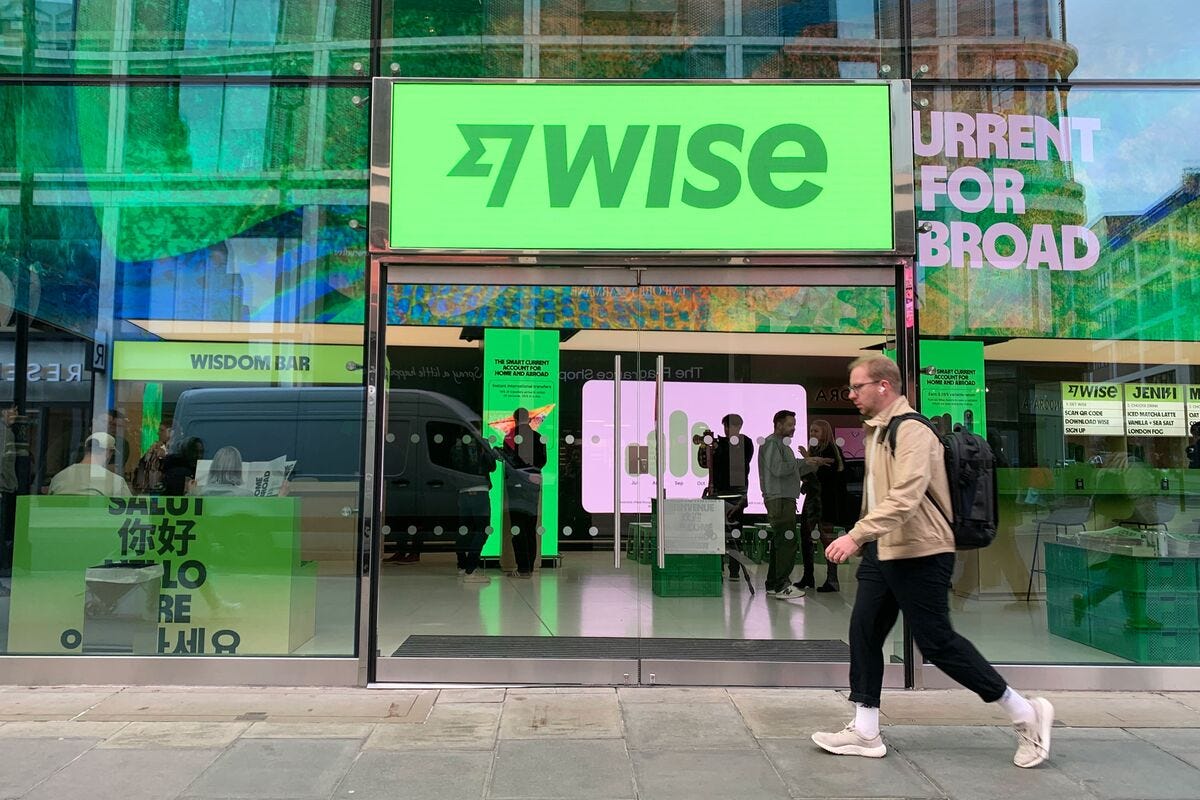
Wise is stepping beyond its roots in cross-border payments by launching a full UK current account, putting it in direct competition with traditional banks and digital challengers like Monzo and Revolut. This move signals a strategic shift toward becoming a primary banking provider rather than just a financial utility. By leveraging its strong brand, low-cost infrastructure, and global user base, Wise is well-positioned to disrupt everyday banking. The launch also reflects a broader trend of fintechs expanding into full-stack financial services to increase customer lifetime value. For incumbents, this raises the stakes as fintech players continue to blur the lines between payments and banking. It also highlights how product expansion—not just innovation—is becoming a key growth lever in fintech. Wise’s next challenge will be scaling this offering while maintaining its simplicity and cost advantage.
Video of the Day

Insight of the Day
How Tokenization Is Evolving for Autonomous Payments

If you lead payments for a digital platform, autonomous purchasing will soon become part of your transaction flow.
Let’s say a customer asks their AI assistant to reorder groceries. The agent selects a product, completes the purchase, and the order ships. The customer never opens a checkout page.
For merchants and their payments teams, this will introduce a new layer of complexity.
When a transaction is initiated by software rather than a person, you need clearer records of how the purchase was authorized and executed to prepare for a potential chargeback dispute.
This is changing the role of tokenization.
Tokenization originally focused on protecting card numbers and reducing PCI scope. Later, network tokenization helped merchants improve approval rates and reduce fraud in subscription and stored credential models.
Autonomous transactions are set to expand that role.
In agent-driven payment flows, tokenization can help document the context around a purchase. State-of-the-art payment infrastructure can capture signals such as:
-> Identity tokens linking the transaction to a specific device or AI agent
-> Intent tokens recording the customer’s original high-level instruction to the agent (for example, “buy running shoes under $150”)
-> Consent tokens capturing the customer’s explicit approval of a specific purchase after the agent presents the product and price
-> Policy tokens defining spending limits or allowed product categories
-> Payment tokens representing the underlying card credentials
Together, these signals can create a transaction record that clearly shows how the purchase was authorized and carried out. Helping create a more complete (and auditable) picture of each transaction.
Modern payment infrastructure is already moving in this direction. The best payment orchestration platforms allow merchants to:
-> Generate portable tokens and securely store credentials
-> Centralize tokenized data across multiple payment providers
-> Maintain consistent transaction records through tokenization and/or a payment orchestration layer
This type of infrastructure helps maintain a unified view of transactions even when payments move across providers or systems. As autonomous purchasing grows, that consistency will become increasingly important for tracking how transactions were authorized and executed.
Tokenization is evolving from a security mechanism into core infrastructure for highly automated commerce environments.
Curated News
💳 Payments
Square Enables Bitcoin Payments for Millions of Merchants
Block’s Square has automatically enabled Bitcoin payments for millions of sellers, dramatically expanding crypto’s real-world utility. This could accelerate mainstream adoption by embedding crypto into everyday commerce.
Source
Nium Launches Stablecoin Card Payment Infrastructure
Nium has introduced a dual-network stablecoin card issuance platform, allowing businesses to spend digital dollars globally. This bridges the gap between crypto and traditional payment networks at scale.
Source
MobiFone Rolls Out New Digital Payments Platform
Vietnam’s MobiFone has launched a new payments platform, expanding digital finance access in Southeast Asia. The move reflects rapid regional growth in mobile-first financial services.
Source
Thunes Expands Instant Cross-Border Payouts for Gig Workers
Thunes is enabling real-time cross-border payouts tailored for gig and remote workers. This supports the growing global workforce and demand for faster, flexible payment solutions.
Source
🏦 Banking
Metro Credit Union Upgrades Digital Banking with Tyfone
Metro Credit Union has selected Tyfone’s nFinia platform to enhance its digital banking experience. This highlights ongoing modernization efforts among regional financial institutions.
Source
LHV Bank Explores AI-Powered Customer Support
LHV Bank is partnering with Gradient Labs to test AI-driven customer support solutions. This reflects a broader shift toward automation in customer experience.
Source
💡 Fintech
Ex-Klarna Team Raises €1.5M for New Fintech Venture
A fintech startup founded by former Klarna executives has raised €1.5 million from J12 and Antler. The funding underscores continued investor confidence in experienced fintech founders.
Source
Cents Secures $140M to Scale Financial Operations Platform
Cents has raised $140 million in Series C funding to expand its business finance platform. The investment highlights strong demand for vertical SaaS fintech solutions.
Source
Notch Raises $30M to Bring AI Agents to Regulated Industries
Notch is building AI agents designed for highly regulated sectors, backed by a $30 million funding round. This signals growing momentum for AI in compliance-heavy environments.
Source
Flowdock Goes Public with AI Back-Office Automation Platform
Flowdock has gone public, positioning itself as a leader in AI-driven back-office automation. This reflects increasing investor appetite for operational efficiency tools.
Source
🪙 Crypto
Ethereum Foundation Stakes $42M to Fund Operations
The Ethereum Foundation has staked $42 million worth of ETH to generate yield for operational funding. This highlights innovative treasury management strategies in crypto.
Source
Bitcoin ETFs See $290M Outflows Amid Risk-Off Sentiment
Bitcoin ETFs have recorded $290 million in outflows as market sentiment turns cautious. This reflects crypto’s sensitivity to broader macroeconomic trends.
Source
Archblock Files for Bankruptcy Amid Fraud Concerns
Archblock has filed for bankruptcy, citing fraud and issues linked to a Justin Sun-related deal. The case highlights ongoing risks and governance challenges in crypto.
Source
Stablecoin Payments Become ‘Invisible’ in Southeast Asia
Stablecoin payments are increasingly embedded into everyday transactions in Southeast Asia. This signals a shift toward seamless, behind-the-scenes crypto adoption.
Source
Coinbase Survey Highlights Crypto Tax Knowledge Gap
A Coinbase survey found that over half of investors don’t understand crypto tax obligations. This underscores the need for better education and clearer regulation.
Source
📈 WealthTech
US Opens 401(k) Retirement Plans to Private Assets
The U.S. Department of Labor is allowing private assets to be included in 401(k) plans. This could reshape retirement investing by expanding access to alternative assets.
Source
⚖️ Regulation
Valt Bank Receives Conditional US Banking Charter
Valt Bank has secured conditional approval for a U.S. national charter. This marks a significant milestone for challenger banks seeking deeper regulatory legitimacy.
Source
🧩 Other
Visa Report Highlights CFO Demand for Flexible Finance Tools
Visa’s Working Capital Index reveals that CFOs across Asia-Pacific are demanding more flexible, digital financial solutions. This reflects shifting expectations in corporate finance management.
Source
Lloyds and University of Glasgow Launch AI Research Initiative
Lloyds Banking Group is partnering with the University of Glasgow on agentic AI research. This collaboration signals growing investment in next-generation AI capabilities in banking.
Source
Disclaimer: Payments Wrap Up aggregates publicly available information for informational purposes only. Portions of the content may be reproduced verbatim from the original source, and full credit is provided with a “Source: [Name]” attribution. All copyrights and trademarks remain the property of their respective owners. Payments Wrap Up does not guarantee the accuracy, completeness, or reliability of the aggregated content; these are the responsibility of the original source providers. Links to the original sources may not always be included. For questions or concerns, please contact us at sam.boboev@fintechwrapup.com.